Key takeaways
- The fourth PURSUE release (10 July 2026) contains 19 'Unresolved UAP Report' videos, catalogued DOW-UAP-PR024, PR030 and PR100 to PR116, plus four Apollo audio tapes
- DOW-UAP-PR113 is the oldest military UAP video ever released, from 1996. AARO says it was 'digitally altered' before it reached the Navy's UAP Task Force, and only 4 seconds of its 2 min 57 s show anything
- Three clips come with the pilots' own Range Fouler debrief forms. One aviator wrote the object was 'unlike anything I had seen in my 28 years' with the USAF and Navy
- Another debrief is candid: the crew ticked 'balloon-shaped' and described 'a large, somewhat deformed balloon' drifting with the wind
- Every clip is monochrome infrared. Almost all show a single 'area of contrast', AARO's deliberately neutral phrase for a blob the sensor tracked and nobody has identified
Jump to section 7 sections
- Pentagon UAP Videos: What's Actually in the Fourth Release
- The 1996 UFO Video: DOW-UAP-PR113 and the 'Digitally Altered' Warning
- Range Fouler Debriefs: What the Pilots Wrote Down
- Indo-Pacific UAP Videos: The Six-Pointed Star and the 'Line' of Contacts
- How to Read an Infrared UAP Video
- Apollo Astronaut Debriefing Tapes: Why Four Audio Files Are in a UFO Release
- Where to Watch the Fourth-Release UAP Videos
The Pentagon's fourth PURSUE release, published at war.gov on 10 July 2026, came with 19 UAP videos. Each is titled "Unresolved UAP Report", each is catalogued DOW-UAP-PR024, PR030 or PR100 to PR116, and each comes with a short, oddly formal description from the All-domain Anomaly Resolution Office (AARO). We downloaded the full 1.55 GB bundle and watched every one of them, then read the three pilot debrief forms that were released alongside.
This is the ninth post in our Document of the Week series, where we take one item from our declassified UAP document archive and explain in plain English what it says. Usually that means a typed memo. This week the "document" is a folder of monochrome infrared footage, and the most interesting thing about it is not what the objects are. It is what AARO chose to write down, and what it admits it does not know.
Pentagon UAP Videos: What's Actually in the Fourth Release
The bundle holds 23 media files. Nineteen are UAP video clips and four are NASA audio recordings (more on those below). The videos range from 5 seconds to just under 5 minutes, and all are infrared. Not one is a daylight colour picture, apart from a few seconds in PR100 where the sensor flips briefly to a day-TV mode and shows "a dark object superimposed against a blue background".
They break down by who submitted them. Indo-Pacific Command sent six clips from the Yellow Sea, East China Sea and South China Sea between 2023 and 2025. Northern Command sent seven from the eastern and western United States and the Atlantic between 2016 and 2020. Central Command sent two short Middle East clips from 2023. The Air Force sent one from the Gulf of America in 2019. The Navy sent one from 2019 taken, unusually, from a civilian aircraft. And two of the oldest, from 1996 and 2015, were not submitted by anyone recently at all: they were handed to AARO in 2022 by the Navy's old UAP Task Force.
Here is the full roster, with the lengths as AARO lists them:
| Clip | Region, year | Length | Submitted by | Notable |
|---|---|---|---|---|
| DOW-UAP-PR113 | Western US, 1996 | 2:57 | UAP Task Force (2022) | Oldest ever released; "digitally altered" |
| DOW-UAP-PR109 | Eastern US, 2015 | 0:21 | UAP Task Force (2022) | "Digitally altered"; slow-motion replay |
| DOW-UAP-PR114 | Atlantic, 2016 | 0:39 | NORTHCOM | Reticle track, object exits right |
| DOW-UAP-PR112 | Eastern US, 2019 | 0:20 | US Navy | Civilian aircraft sensor; pairs with debrief D090 |
| DOW-UAP-PR115 | Gulf of America, 2019 | 0:08 | US Air Force | AARO explains the IR flicker |
| DOW-UAP-PR106 | Eastern US, 2020 | 0:11 | NORTHCOM | "Digitally altered"; pairs with debrief D089 |
| DOW-UAP-PR107 | Eastern US, 2020 | 0:28 | NORTHCOM | Object leaves and re-enters frame |
| DOW-UAP-PR108 | Western US, 2020 | 2:16 | NORTHCOM | Auto-track reticle, then lost |
| DOW-UAP-PR110 | Eastern US, 2020 | 0:27 | NORTHCOM | Object grows in angular size |
| DOW-UAP-PR111 | Eastern US, 2020 | 1:00 | NORTHCOM | Several small contacts |
| DOW-UAP-PR116 | Atlantic, 2020 | 0:32 | NORTHCOM | "Deformed balloon"; pairs with debrief D091 |
| DOW-UAP-PR024 | Middle East, 2023 | 0:18 | CENTCOM | Two bright contacts cross a tracked dark one |
| DOW-UAP-PR030 | Middle East, 2023 | 0:10 | CENTCOM | Two contacts, opposite directions |
| DOW-UAP-PR100 | Yellow Sea, 2023 | 4:57 | INDOPACOM | Brief day-TV view of a dark object |
| DOW-UAP-PR101 | South China Sea, 2024 | 1:46 | INDOPACOM | A "line" of several contacts |
| DOW-UAP-PR102 | East China Sea, 2024 | 0:36 | INDOPACOM | Tracked, exits top of frame |
| DOW-UAP-PR103 | East China Sea, 2024 | 1:16 | INDOPACOM | Auto-track reticle throughout |
| DOW-UAP-PR104 | Yellow Sea, 2025 | 0:18 | INDOPACOM | The "six-pointed star" |
| DOW-UAP-PR105 | East China Sea, 2025 | 5:00 | INDOPACOM | Longest clip; newest incident |
The descriptions all follow the same template. Time codes, what the sensor did, and the phrase "area of contrast" for the thing being tracked. Each ends with the same disclaimer: the description is "provided for informational purposes only" and should not be read as any judgment about the event's "validity, nature, or significance". It is the most careful language we have seen in any of the five releases so far. AARO wants these read as records, not verdicts. We covered the release as a whole in our fourth PURSUE release overview, and the earlier clips in what the DoD's UAP videos actually show. This post goes clip by clip.
The 1996 UFO Video: DOW-UAP-PR113 and the 'Digitally Altered' Warning
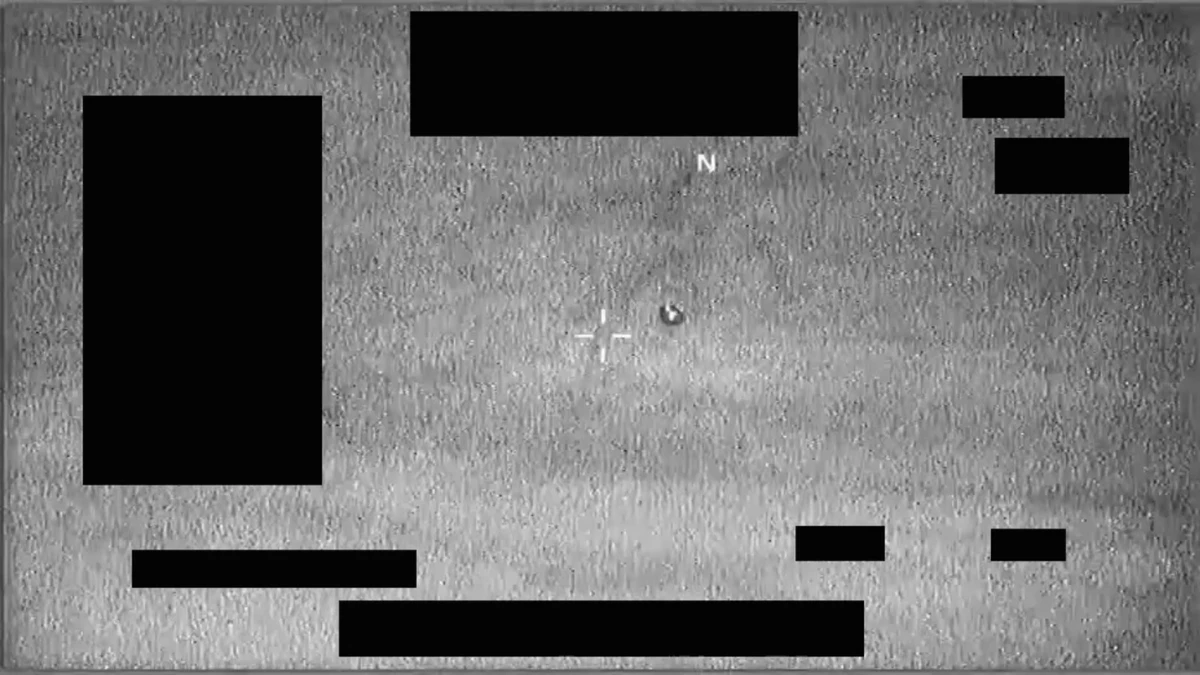
DOW-UAP-PR113 is the one worth your time. It is the oldest military UAP video the US government has ever released, captured "likely" by an infrared sensor over the western United States in 1996, and it looks it. The image is soft, analogue and striped, with a tick-marked scale down each side and large black redaction boxes covering the on-screen data. There is no reticle, no zoom, no target box. It is a camera pointed at grey sky.
The file runs 2 minutes 57 seconds, but AARO's description makes clear how little of that is real. Seconds 1 to 13: "no content". Seconds 14 to 17: an area of contrast "transits the sensor field-of-view, entering near the upper right corner and exiting near the lower left corner". Then the same four seconds repeat frame by frame until 1:21, repeat again at slower speed until 2:13, and the final 43 seconds hold a single frame pulled from the opening. Four seconds of event, padded to three minutes.
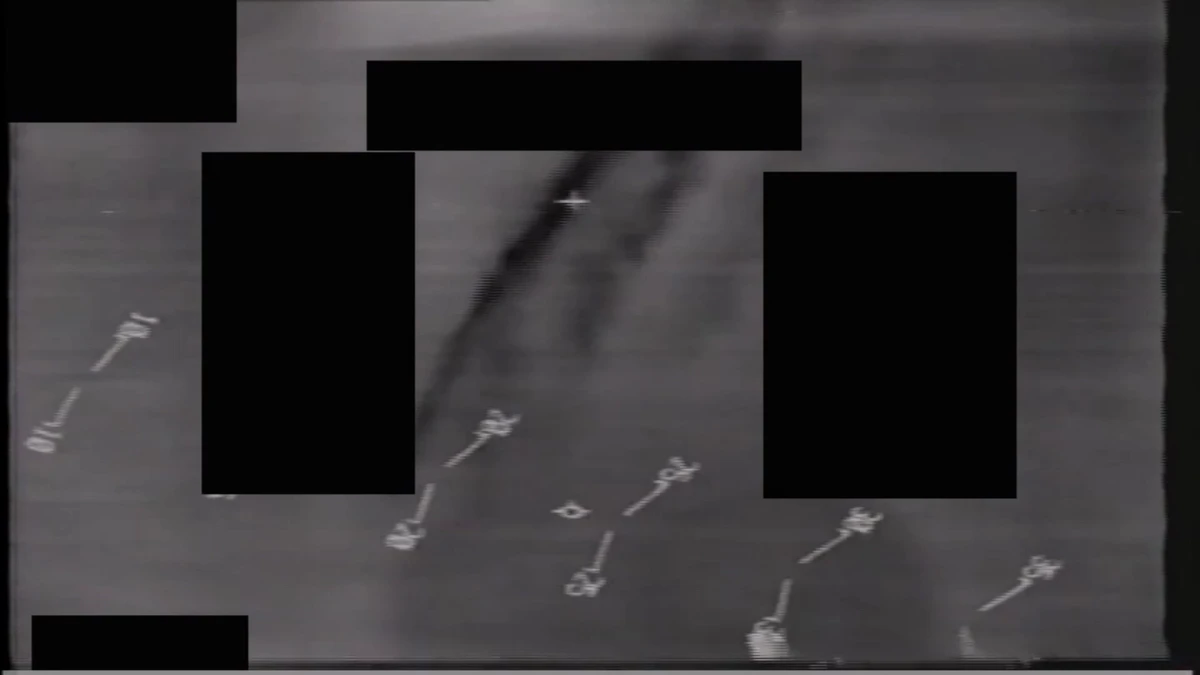
The padding is the point of the warning that heads the description. "No formal data handling practices for UAP-related records existed at the time this media was reported to the UAPTF," AARO writes. "This media was digitally altered before being reported to the UAPTF, and is presented as it was received by AARO." Read that plainly and it says: somebody, at some point between 1996 and 2022, edited this tape into a highlight reel with replays and a freeze frame, and we no longer have the original.
That is not an accusation of fakery, and nothing about the object in the streak is claimed to be altered. It is a chain-of-custody problem, the same one the Navy ran into in 1952 when it tried to analyse the Tremonton UFO film from a copy. Once a recording has been cut, slowed and re-saved, an analyst cannot measure frame timing, sensor gain or the object's true angular speed. Whatever crossed that sky in 1996 crossed it in about three seconds, top right to bottom left, and that is all the file can now tell anyone.
The same warning appears on two other clips. DOW-UAP-PR109, from the eastern United States in 2015, also came through the UAP Task Force, also shows a single pass (an object moving right to left before "exiting from upper left corner of the frame") and also repeats itself in slow motion. DOW-UAP-PR106, from 2020, was "digitally altered before being reported to AARO" too, and at five seconds it is the shortest clip in the release.
Range Fouler Debriefs: What the Pilots Wrote Down
Three videos come with paperwork, and the paperwork is where the human voices are. A Range Fouler debrief is the Navy's one-page form for anything unknown that "fouls" a training range. It has tick boxes for shape and appearance, a plea to work out a latitude and longitude, and a free-text box at the bottom. The header promises that identifying details are stripped out, and the released copies are heavily redacted, but the tick boxes and the free text survive.
DOW-UAP-D090 pairs with video PR112, from the eastern United States in 2019, the clip that was shot from a sensor on a civilian aircraft. The pilot's account is the best-known line of the whole release, and it reads better in full:
"In between mission sorties, I noticed an object with flight characteristics unlike anything I had seen in my 28 years of performing [redacted] for the USAF and Navy."
The rest of the paragraph is the useful part. The object was small, below the aircraft, travelling "in a straight line opposite our direction at high speed". The pilot watched it for 10 to 15 seconds before anyone switched the recorder on, so the 20-second video only catches the tail end. When they zoomed in for detail, "the object's speed took [it] out of my FOV and I was unable to reacquire, even at a lower zoom". Looking at the footage afterwards, the crew thought it looked rectangular, and "others with equal or more experience were also unsure as to what this object might be". Watch PR112 and you see a small dark spot with a tracking reticle on it, a flash of white as the sensor changes mode, and then nothing.
DOW-UAP-D089 goes with PR106, the five-second clip from 2020. A pilot with the rank O-4 (a lieutenant commander) ticked "metallic" and "reflective", and wrote that the object "appeared quite small", kept "a constant direction", and had a shape that was "indiscernible but the bottom was reflective". That is the whole account, for a five-second video.
DOW-UAP-D091 goes with PR116, from the Atlantic in 2020, and it is the honest one. The weapons systems officer, rank O-3, ticked round, square, balloon-shaped, other shape, metallic, opaque and reflective, which suggests a form that was not built for what they saw. The free text says the object "was a darker, maroonish color, approximately 12-15ft in height. Structurally, it appeared as a large, somewhat deformed balloon". AARO's summary adds that it travelled with the wind and did not "maneuver or change direction". The crew went back to the ship and landed "uneventfully". The video shows a dark, lumpy shape held between two white brackets for 32 seconds. It looks like a balloon. The crew said it looked like a balloon. It is still filed as unresolved, because nobody proved it was one.
That contrast matters. The 28-year veteran's report and the deformed-balloon report sit in the same release, under the same "Unresolved UAP Report" title, in the same format. The label tells you the case was not closed. It does not tell you the case is strange.
See what a sensor sees, but in colour
Kit we've tested and reviewed in full
Most of these clips are a dark blob against a bright sky, because that is all a thermal camera gives you. Your own eyes and a decent pair of binoculars show shape, colour and lights, which is exactly what the pilots wished they had. New to them? Start with our guide to binocular astronomy.
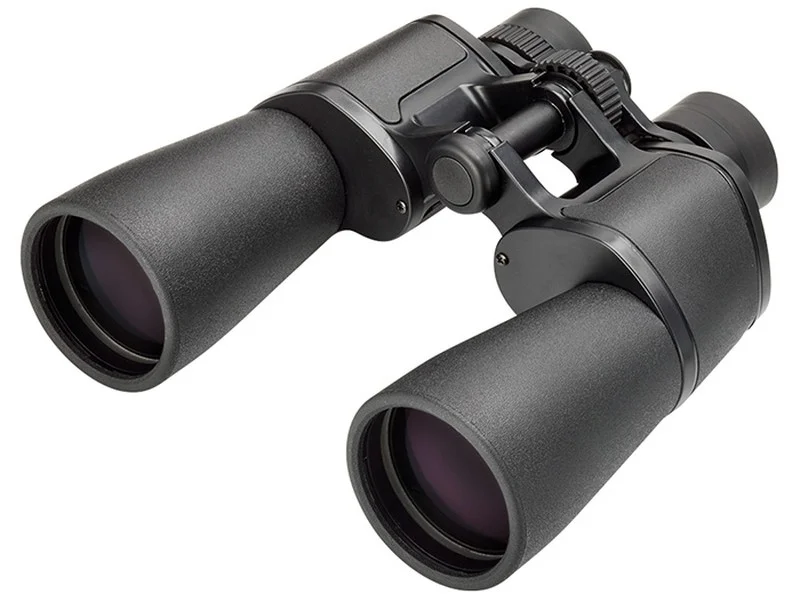
Wide field, bright image, quick to get on a moving light. The fastest way to turn 'something odd' into 'a plane with its landing lights on'.
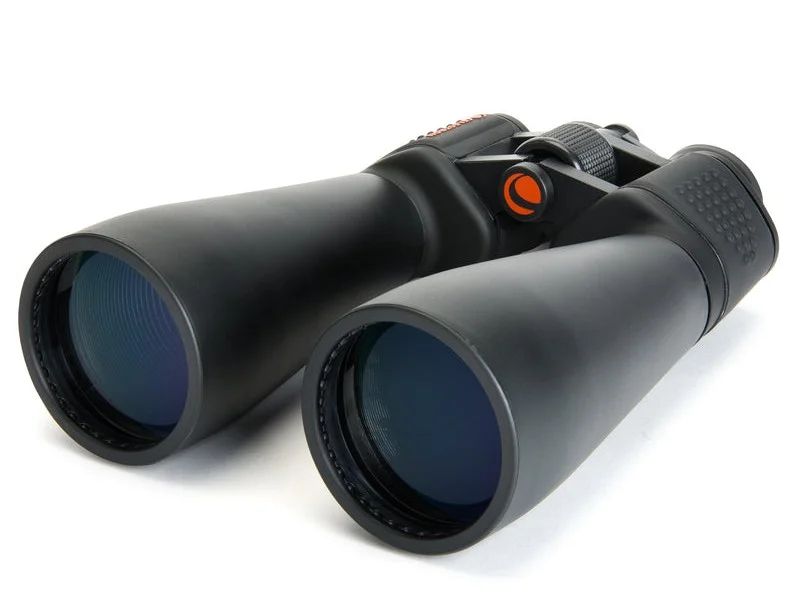
Bigger and heavier, but 15x lets you pick out the shape of a high balloon or the strobe pattern on an aircraft.
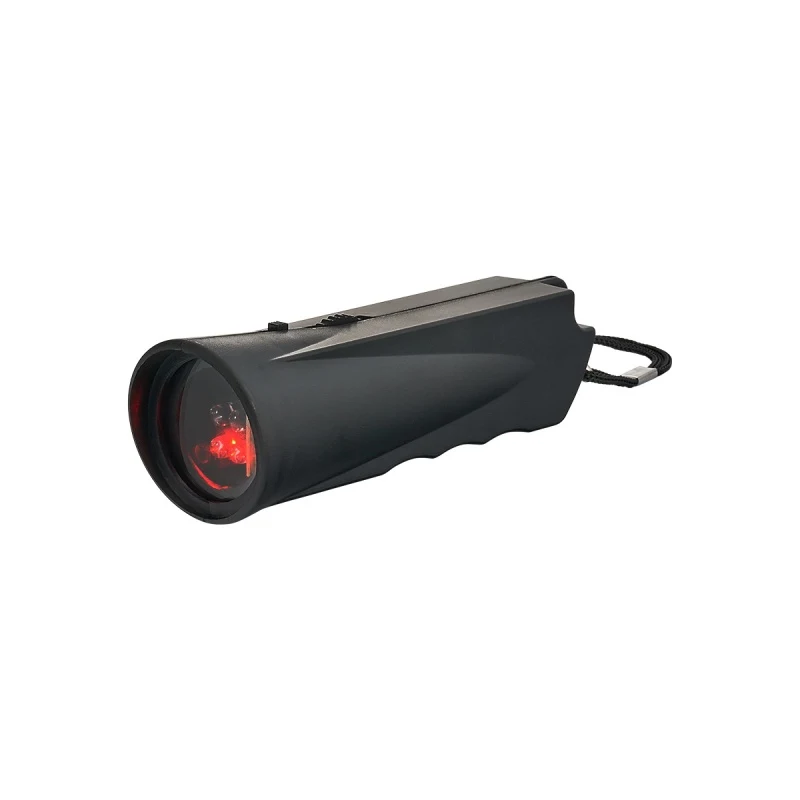
Astro Essentials Red Light Torch
A red torch means you can check a sky app or note the time without losing your dark adaptation.
Affiliate links: you pay the same price, we earn a small commission that helps keep WatchTheStars free.
Indo-Pacific UAP Videos: The Six-Pointed Star and the 'Line' of Contacts
The six Indo-Pacific clips are the newest and, on screen, the most striking. DOW-UAP-PR104, 15 seconds from the Yellow Sea in 2025, is the release's signature image: a dark "area of contrast resembling a six-pointed star" sitting in the centre of a bright thermal sky. It went round the world in July. What most coverage skipped is that the star shape is typical of a small, hot point source blooming through a sensor's optics. The spikes are diffraction, the same effect that gives bright stars their points in a telescope photo. The shape says the source was compact and warm, and nothing more.
DOW-UAP-PR101, from the South China Sea in 2024, is the one we would send people to. For the first 28 seconds the sensor tracks a single elongated blob. Then it zooms in and the blob resolves into "a 'line' of several areas of contrast moving across the sensor field-of-view from the bottom right to the top left". The sensor follows them for about a minute as they "become less distinct over time as their distance from the sensor increases". A string of warm objects in a line, travelling together, fading with distance. Anyone who has watched a fresh Starlink train cross the sky will have a candidate in mind. Anyone who has watched a flight of aircraft will have another. AARO offers neither.
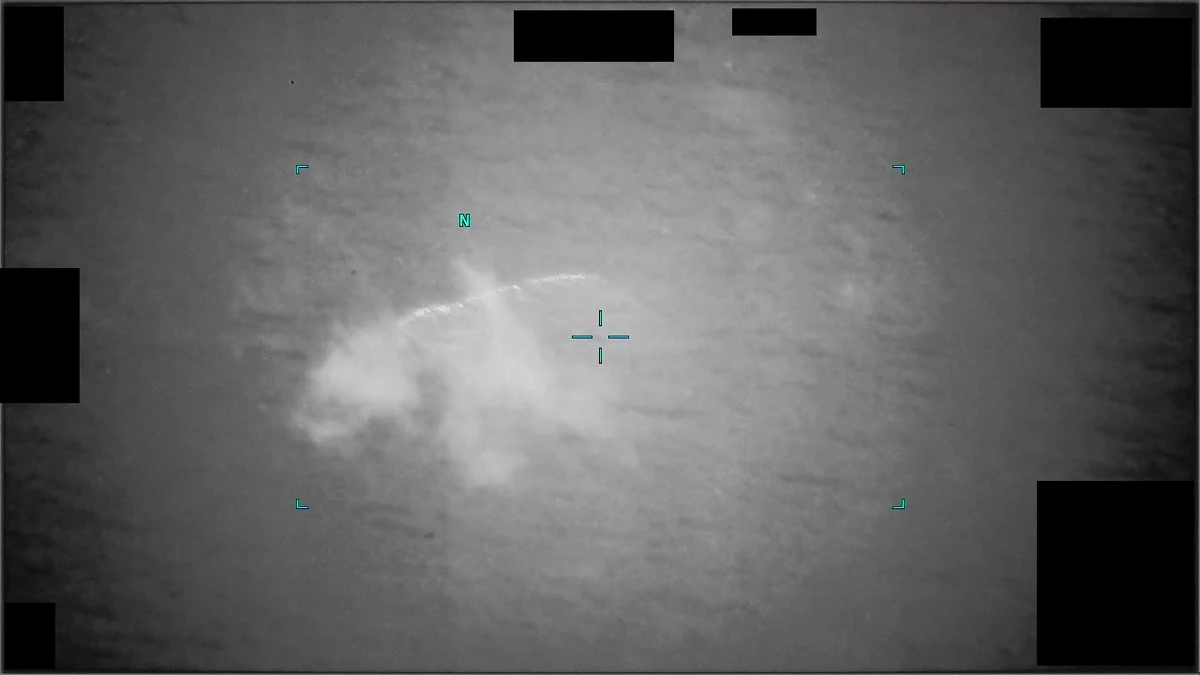
The remaining Indo-Pacific clips are variations on a theme. PR100 (Yellow Sea, 2023) is nearly five minutes of a sensor losing and re-finding a contact while the picture "progressively degrades". PR102 and PR103 (East China Sea, 2024) are 36 seconds and 76 seconds of a reticle holding a blob in the centre of the frame. PR105 (East China Sea, 2025) is the longest at five minutes, and AARO notes that after 2:06 there is "no content". The two CENTCOM clips from the Middle East, PR024 and PR030, are shorter still and show pairs of bright contacts crossing the frame in seconds. PR024 is the more interesting: the sensor is locked on a dark object when two bright ones streak past left to right, then returns to the dark one and boxes it with a reticle.
How to Read an Infrared UAP Video
If you watch all 19 in a row, one thing becomes obvious. What you are looking at is heat, and what a targeting pod's software does with heat. The object itself is a step removed.
An infrared sensor maps temperature to brightness. Depending on the mode, hot things show white or black. Anything close to the background temperature blends in, and the system's auto-gain constantly rescales the contrast to keep the picture usable, which is why so many of these clips "flash white", flicker, or lose the object when the sensor "switches modes". AARO says this outright in its comment on DOW-UAP-PR115, an eight-second Air Force clip from the Gulf of America in 2019: when a tracked source's temperature is similar to its surroundings, "it can visually blend into the background or appear to flicker due to dynamic contrast adjustments applied by the system's auto-gain control filters". That one sentence explains half the "vanishing" in the set.
The other habit to watch for is the auto-tracker. PR103, PR108, PR110, PR111 and PR114 all show a reticle snapping onto a contact and the sensor slewing to keep it centred. When the pod pans, the background streams past and the object appears to hover. When the object is closer than the pilot assumes, a slow drift looks like a sprint. Without range data, and with the data blocks blacked out for release, there is no way for a viewer to tell speed from angle, or size from distance. That is why AARO writes "area of contrast" rather than "object", and why we think the phrase, irritating as it is, is fair.
None of this means the clips are worthless. It means the video is the weakest kind of evidence in each case, and the debrief form, the radar track and the pilot's memory carry the weight. The same lesson runs through the older files in the archive, from the Air Force's analysis of the Tremonton film to the Brazilian photographer who found his best Operação Prato shot matched Venus. A picture of a light is a picture of a light.
Apollo Astronaut Debriefing Tapes: Why Four Audio Files Are in a UFO Release
The four remaining files in the bundle are audio, filed as NASA-UAP-D026 to D029, and they have nothing to do with unidentified objects. They are the Apollo 14 post-mission crew debriefing from February 1971 (1 hr 36 min plus 32 min) and the Apollo 17 crew medical debriefing from December 1972 (53 min plus 51 min), recorded at what is now the Johnson Space Center in Houston.
The subject is the "light flash phenomena": streaks and flashes astronauts saw with their eyes shut, which NASA's description calls "a then novel, now well-documented biological effect where high-energy cosmic rays pass through the eye and strike the retina". Two of the three Apollo 17 crew reported them in lunar orbit and on the surface. It is a real and rather wonderful piece of space medicine, and hearing Shepard, Roosa and Mitchell questioned about it is a treat for anyone who cares about the Moon landings. We have added the tapes to our Apollo 17 encounter page. But its presence in a UFO release says more about how the PURSUE search terms were set than about anything the astronauts saw. We looked at NASA's actual Apollo anomalies, and what they were, in NASA's own Apollo photographs.
Where to Watch the Fourth-Release UAP Videos
All 19 videos and the four audio files were published on 10 July 2026 at war.gov/ufo and mirrored on DVIDS, with the metadata (titles, incident years, submitting commands) held in the site's database rather than in the files themselves. Our PURSUE releases collection guide indexes the local copies we hold, alongside the three Range Fouler debriefs and the fourteen PDFs from the same release, including the STS-80 shuttle photographs that came out the same day.
If you want the short version: watch PR113 for the history, PR112 for the pilot's account, PR101 for the puzzle, and PR116 to see what an honest "probably a balloon" looks like on a targeting pod. Then read the debrief forms, because that is where the actual reporting is. AARO's own FY2025 annual report explains why so many of these cases stay open: not enough data to close them, and no one collecting more. The rest of our UAP and UFO research coverage is in one place.
Sources:
- DOW-UAP-PR024, PR030, PR100–PR116, "Unresolved UAP Report" videos, and NASA-UAP-D026–D029, US Department of War PURSUE Release 4, 10 July 2026 (local archive copies; metadata from the war.gov
uap-data.csvdatabase) - DOW-UAP-D089, D090, D091, Range Fouler Debrief forms, US Navy, released in part 19 May 2026 under the FY24 NDAA (local archive copies)
- Department of War UAP files · war.gov
- Pentagon Releases New Batch of UAP Videos and Historical Files, But Clarity Remains Elusive · The Debrief
- Pentagon's New UFO Files Include Chilling Military Video · Los Angeles Magazine
Frequently Asked Questions
Equipment guides
Related topics

Ian ClaytonAmateur astronomer and founder of WatchTheStars.co.uk, dedicated to helping others explore the wonders of our universe. Full profile →