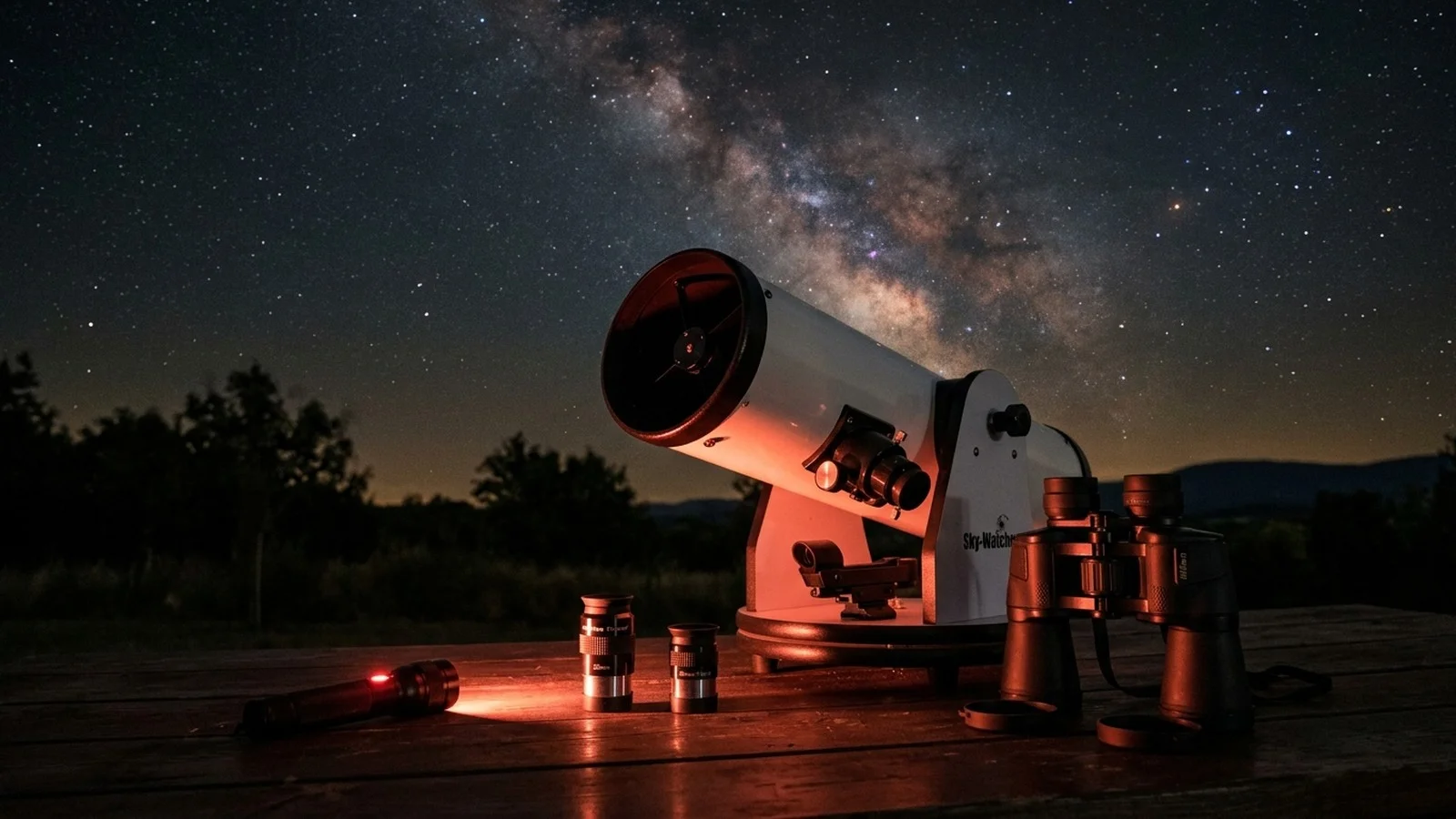
Sky-Watcher Heritage 130P vs Evostar 72ED: which should you buy?
Short answer: buy the Sky-Watcher Heritage 130P if you want to look at the sky with your own eye, and buy the Sky-Watcher Evostar 72ED only if you want to photograph it and are ready to buy a tracking mount and a camera as well. These two are not rivals. The 130P is a complete visual telescope for £194: a 130mm mirror, a tabletop Dobsonian mount and two eyepieces, with nothing to align. The 72ED is a £279 optical tube on its own, with a 72mm lens that gathers less than a third of the 130P's light, no mount and no eyepiece; its job is to put a camera behind sharp, colour-free glass, and on a Star Adventurer GTi it is the standard UK first imaging telescope. People buy the wrong one every week because both say Sky-Watcher on the box and both cost about the same.
The two telescopes, and the mount that makes the 72ED work
Kit we've reviewed in full
Both are Sky-Watcher, both are stocked by First Light Optics with UK warranty and 30-day returns, and they are bought by two different kinds of person. Prices on the cards update from our product data.
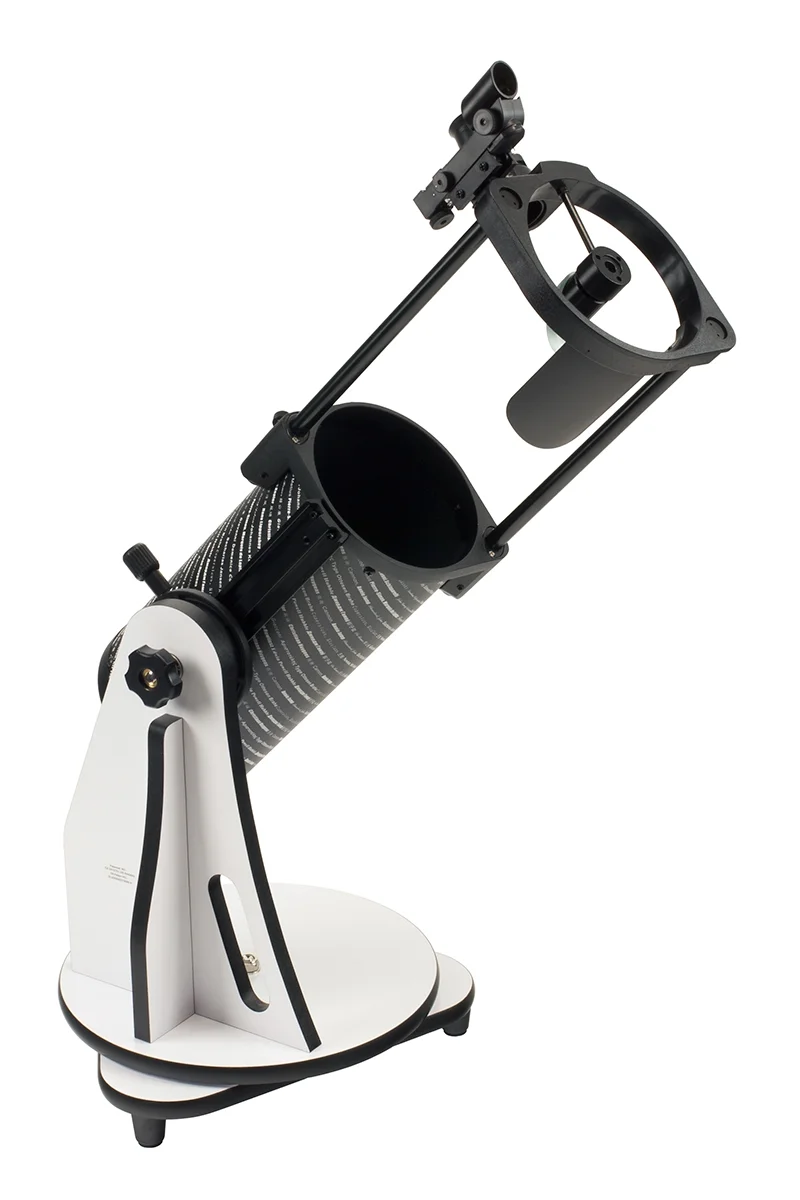
A 130mm mirror on a tabletop Dobsonian mount, eyepieces in the box, nothing to align. Saturn's rings and Jupiter's belts on the first night for under £200.
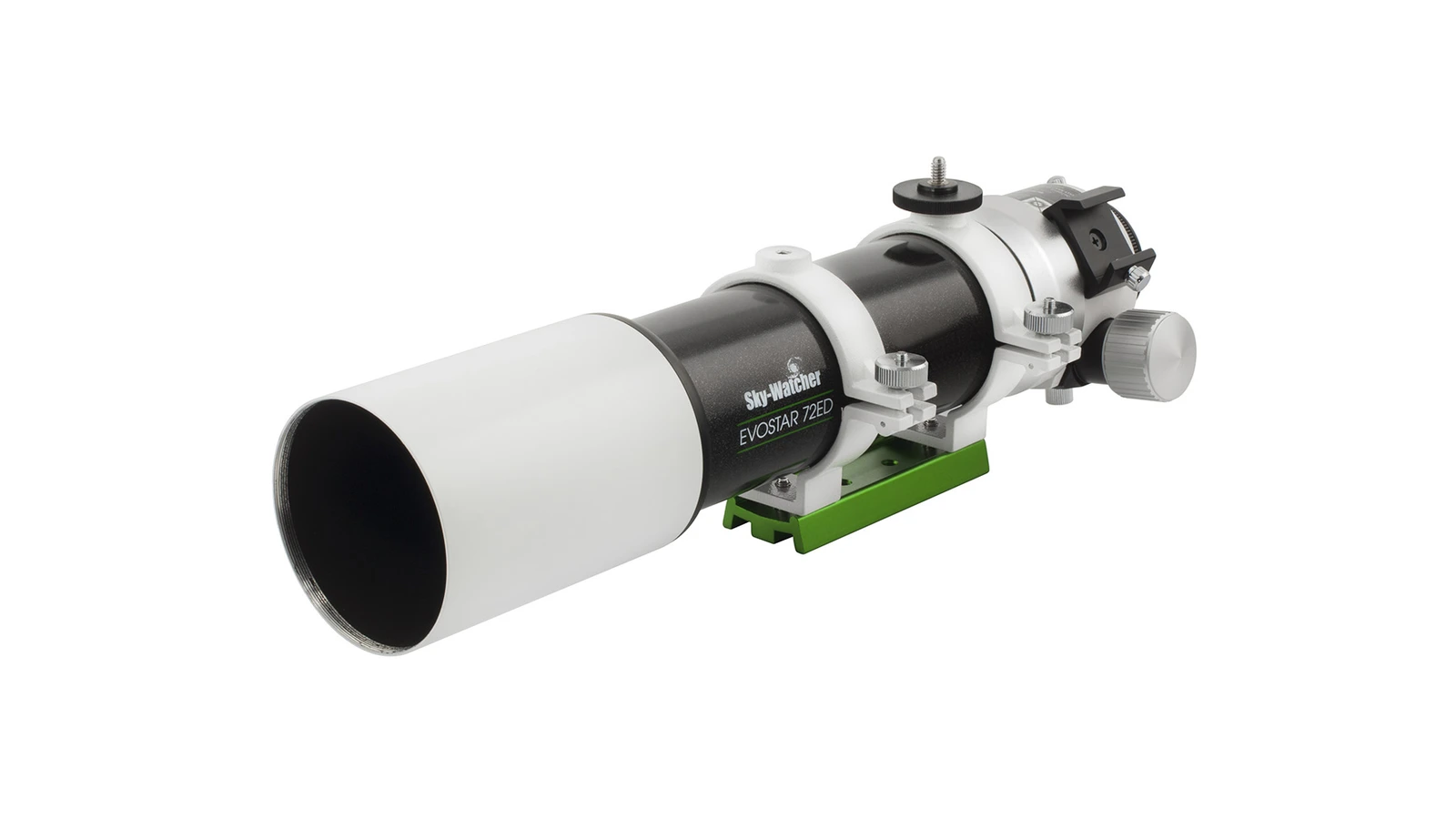
Sky-Watcher Evostar 72ED DS-Pro
A 72mm ED doublet at 420mm focal length, about 2kg. Colour-free stars and a wide field for nebulae and galaxies. Needs a tracking mount and a camera to make sense.
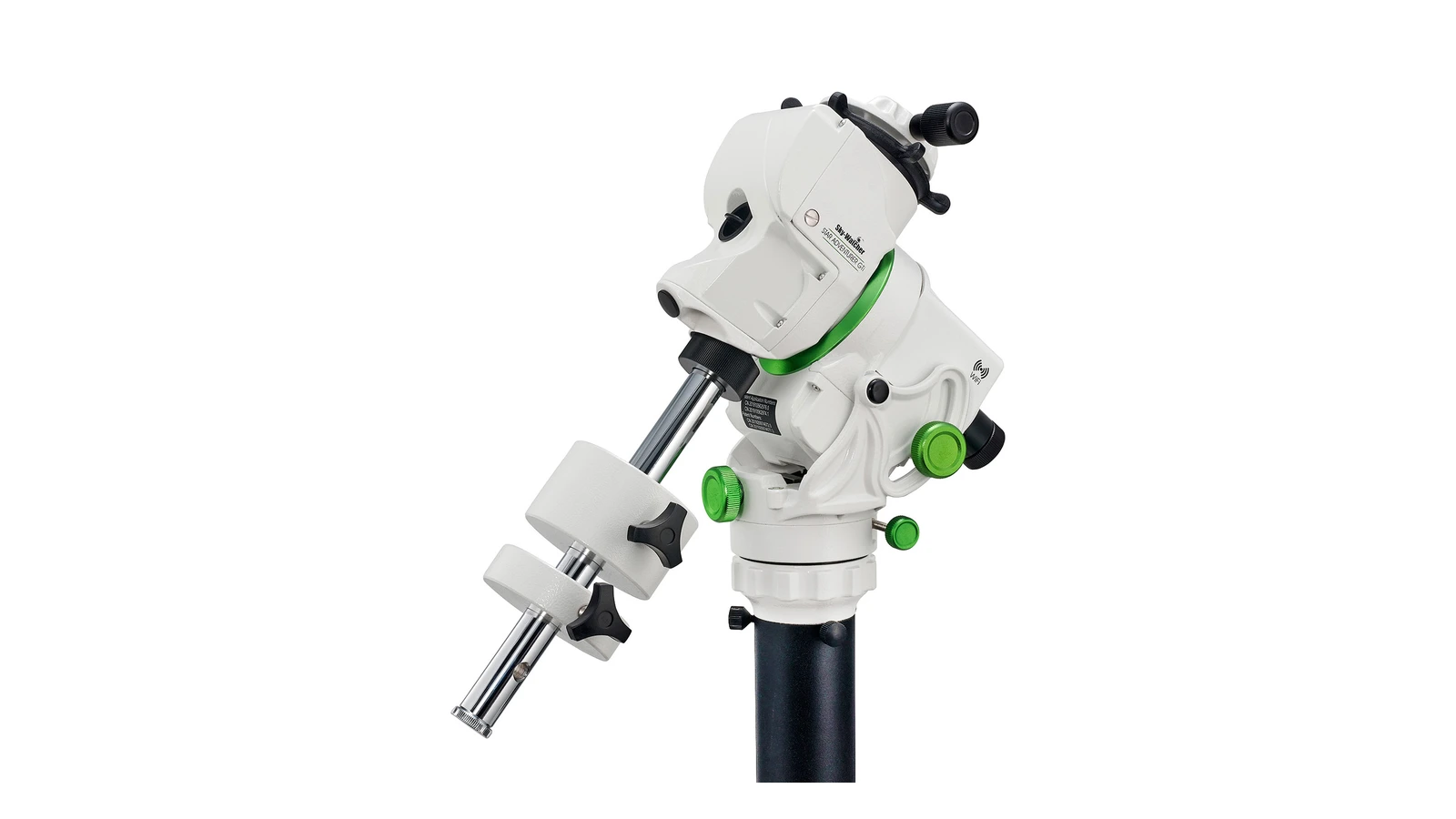
Sky-Watcher Star Adventurer GTi
A 5kg-payload GoTo equatorial tracker with an autoguider port. The most common thing under a 72ED in a UK garden.
Affiliate links: you pay the same price, we earn a small commission that helps keep WatchTheStars free.
| Spec | Heritage 130P | Evostar 72ED |
|---|---|---|
| Design | Newtonian reflector, parabolic mirror | ED doublet refractor |
| Aperture | 130mm | 72mm |
| Focal length | 650mm (f/5) | 420mm (f/5.8) |
| Light gathered | 3.3 times the 72ED | Baseline |
| Mount | Tabletop Dobsonian, included | None; needs a tracking mount |
| Eyepieces | 25mm (26x) and 10mm (65x) included | None; diagonal and eyepiece extra |
| Weight | About 5.2kg complete | About 2kg, tube only |
| Collimation | Occasional, two minutes | Never |
| Tracking | No, push to follow | From the mount you add |
| Best at | Planets, Moon, clusters, visual deep sky | Wide-field nebulae and galaxies on camera |
| UK price | £194 | £279 tube only |
What does each telescope show? Aperture and focal length
The Heritage 130P shows far more at the eyepiece, because aperture decides what you can see and 130mm beats 72mm by a wide margin. A 130mm mirror has 3.3 times the light-gathering area of a 72mm lens. Through the 130P from a suburban garden you get Saturn's rings with the gap on steady nights, Jupiter's two main belts and four moons, craters along the Moon's terminator, the Orion Nebula with its four Trapezium stars, and globular clusters starting to grain. Its 650mm focal length and the supplied 10mm eyepiece give 65x; an 8mm takes it to 81x for planets, as our guide to telescope magnification explains.
The Evostar 72ED through an eyepiece is sharper per millimetre but much smaller. Stars are pinpoints with no colour fringing, the Moon is etched, and at 420mm the whole of the Pleiades or the Andromeda Galaxy fits in a low-power view. But Jupiter is a small disc at the 80x to 100x the focal length reaches comfortably, and faint nebulae stay faint. On a camera the picture flips. The 72ED's short focal length and flat, colour-free field are exactly what a sensor wants: a 60-second exposure on a tracking mount records the Orion Nebula's colours and the Andromeda Galaxy's dust lanes, which no eyepiece on any telescope will show you. That is the trade: the 130P wins every visual target; the 72ED wins every photograph.
How much does a working setup cost? Heritage 130P vs Evostar 72ED
A working Heritage 130P costs about £266; a working Evostar 72ED starts at about £714 before the camera. That gap is the real difference between the two, so here is each bill in full, with every price read from our product data.
| Heritage 130P, visual | Price |
|---|---|
| Heritage 130P, with mount and two eyepieces | £194 |
| BST StarGuider 8mm eyepiece for planets (81x) | £55 |
| Rigel Aline collimation cap | £6 |
| Moon filter for a full Moon that is too bright | £11 |
| Total, ready to observe | £266 |
| Evostar 72ED, astrophotography | Price |
|---|---|
| Evostar 72ED optical tube | £279 |
| Star Adventurer GTi GoTo tracking mount, with tripod | £435 |
| Telescope and mount | £714 |
| Or the Star Adventurer 2i instead of the GTi (needs your own sturdy photo tripod and ball head) | £249, so £528 with the tube |
| Camera: the DSLR or mirrorless you own, or a dedicated ZWO ASI294MC | Owned, or £745 |
| Reducer/flattener for flat stars to the corners (our 72ED review puts the Sky-Watcher unit at around £209) | Not in our product data |
| Total with the GTi and the ZWO camera, before the flattener | £1,459 |
The 72ED on the Star Adventurer 2i is the budget route for anyone who already owns a camera and a solid photo tripod. It works, with short unguided exposures, but the GTi's GoTo and autoguider port are what make it a relaxed night rather than a fiddly one. Our telescope mount buyer's guide and the astrophotography starter kit page lay out the next steps up, and DSLR astrophotography for beginners covers the camera side.
Weight, portability and set-up time
The Heritage 130P is the lighter and quicker of the two as a complete telescope, at about 5.2kg with its tube collapsed to the length of a shoebox. Carry it to a garden table in one hand, extend the tube, point it: under two minutes from cupboard to Saturn. The 72ED tube alone is lighter still at about 2kg, which is why small mounts carry it so well, but a working rig is tube plus mount plus tripod plus camera plus cables plus a battery, and it needs polar alignment before the first exposure. Allow 20 minutes to set up and the same to pack away. Neither is heavy; one is quick. That matters more in Britain than it sounds, because clear spells are short: a telescope that is outside and cooled in two minutes catches the gap between two banks of cloud, and a rig that takes 20 minutes often does not. The 130P gets used on more nights for that reason alone.
Maintenance: collimation vs none
The Heritage 130P needs occasional collimation and the Evostar 72ED needs none. The 130P's mirrors drift slightly with handling and temperature changes, so every few sessions you look through the collimation cap and turn three screws until the reflections line up. It takes two minutes once you have done it twice, and our guide to how to collimate a telescope walks through it with photos. The 72ED's lens is fixed at the factory and stays put; its only upkeep is keeping dew off the front, which the retractable dew shield helps with. The 130P's open tube also lets dew and stray light at the mirrors; a home-made shroud cut from a camping mat is the usual fix, and our telescope dew prevention guide covers both scopes.
Who should buy the Heritage 130P and who should buy the Evostar 72ED?
- First telescope, not sure the hobby will stick: Heritage 130P. It is the safest £194 in astronomy, and it holds its value second-hand.
- Want to see planets, the Moon and clusters with your own eye: Heritage 130P, or the Heritage 150P at £249 for a third more light.
- Want photographs of nebulae and galaxies and already own a camera: Evostar 72ED on a Star Adventurer GTi.
- Want the odd Moon photo with your phone: Heritage 130P plus a £55 NeXYZ phone adapter.
- Want a no-maintenance telescope for sharp views of the Moon and double stars, and know it will be small: Evostar 72ED with a diagonal and eyepiece, on a light alt-azimuth mount.
- Want both, eventually: buy the 130P now, learn the sky with it, and add the 72ED and mount when you know what you want to photograph. Many UK amateurs own exactly this pair.
If the photography pull is strong but the mount and camera bill is not, a smart telescope does the imaging job in one box: our Seestar S50 vs Dwarf 3 comparison covers the two best-sellers, and the best beginner telescopes UK guide puts all of these side by side. For the wider Sky-Watcher range, see our Sky-Watcher telescopes guide.
How we reviewed this
This is a research-based review rather than a laboratory test. The facts on this page come from the manufacturer's specifications, the First Light Optics listing and its customer reviews, and the long-running owner threads on Stargazers Lounge and Cloudy Nights, checked against what the same kit shows from a typical UK garden. We have not necessarily used every item ourselves; where we have, the page says so. We receive no free equipment, and the retailer links pay a small commission that never changes the price you pay or the verdict we give.
Prices are read from our product data, last checked against First Light Optics on 2 November 2026. Page last updated 6 November 2026. Own this kit and see it differently? Email [email protected] and we will update the page.