Key takeaways
- Callisto is Jupiter's second-largest moon, about 4,820 km across, and NASA calls it the most heavily cratered object in the solar system
- Callisto's surface is very old and appears not to have been geologically active for a billion years or so, according to ESA
- A 2025 study of Galileo data found that Callisto very likely has a salty ocean under its ice
- From the UK, Callisto is the faintest of Jupiter's big moons but can be seen in binoculars because it strays furthest from the planet
Jump to section 7 sections
Callisto: Jupiter's Ancient, Cratered Moon
Callisto is the second-largest moon of Jupiter and the third largest in the solar system, a dark ball of ice and rock about 4,820 km across. NASA calls it the most heavily cratered object in the solar system. ESA says its surface is very old and appears not to have been geologically active for a billion years or so, which makes Callisto a world that has barely changed. It may also hide a salty ocean under its ice.
Callisto is the outermost of the four large Galilean moons, about 1.88 million km from Jupiter, nearly five times the distance from Earth to our own Moon. It goes round once every 16.7 days and always keeps the same face towards the planet, so one day on Callisto lasts 16.7 Earth days. Galileo Galilei discovered it in 1610, along with Io, Europa and Ganymede. It is not a friendly place. The average temperature is about −155°C and the gravity is about one-eighth of Earth's.
Is Callisto Bigger Than Mercury?
Almost. Callisto is about 4,820 km across and Mercury about 4,880 km, so Callisto is about 1% narrower. It is about 39% wider than our Moon. Only Ganymede and Saturn's moon Titan are bigger.
Mercury is far heavier. It is dense and full of iron, while Callisto is mostly ice and rock, so Callisto has only about a third of Mercury's mass.
| Body | Diameter (km) | Mass (1021 kg) | Density (kg/m3) | Surface gravity (m/s2) |
|---|---|---|---|---|
| Ganymede | 5,262 | 148.2 | 1,940 | 1.43 |
| Mercury | 4,879 | 330.2 | 5,427 | 3.7 |
| Callisto | 4,821 | 107.6 | 1,830 | 1.24 |
| Our Moon | 3,475 | 73.5 | 3,340 | 1.6 |
Why Is Callisto So Heavily Cratered?
Because nothing has wiped the craters away. On Earth, weather, volcanoes and moving plates keep erasing them. On Callisto very little has happened for a very long time, so every impact is still on show. It is a common mix-up to think a surface covered in craters must be active. It is the opposite: many craters mean an old, quiet surface. Callisto's neighbour Ganymede has old cratered ground too, but it also has younger, grooved ground, which is why Ganymede looks so different.
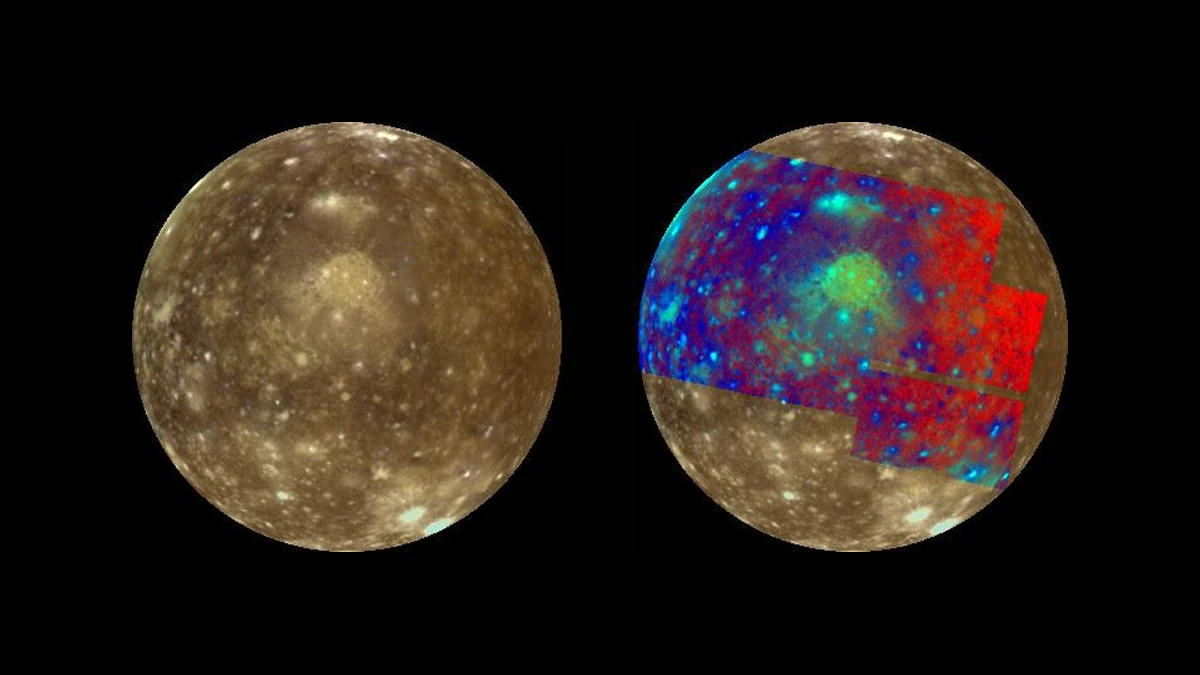
NASA's Galileo spacecraft studied Callisto's craters between 1996 and 2001. Scientists believe the brighter areas are mainly ice and the darker areas are highly eroded, ice-poor material, as NASA's caption for the colour view at the top of this page puts it. Younger craters show up as bright spots, probably because they expose fresh ice and frost, according to NASA's caption for a Voyager 2 picture of Callisto.
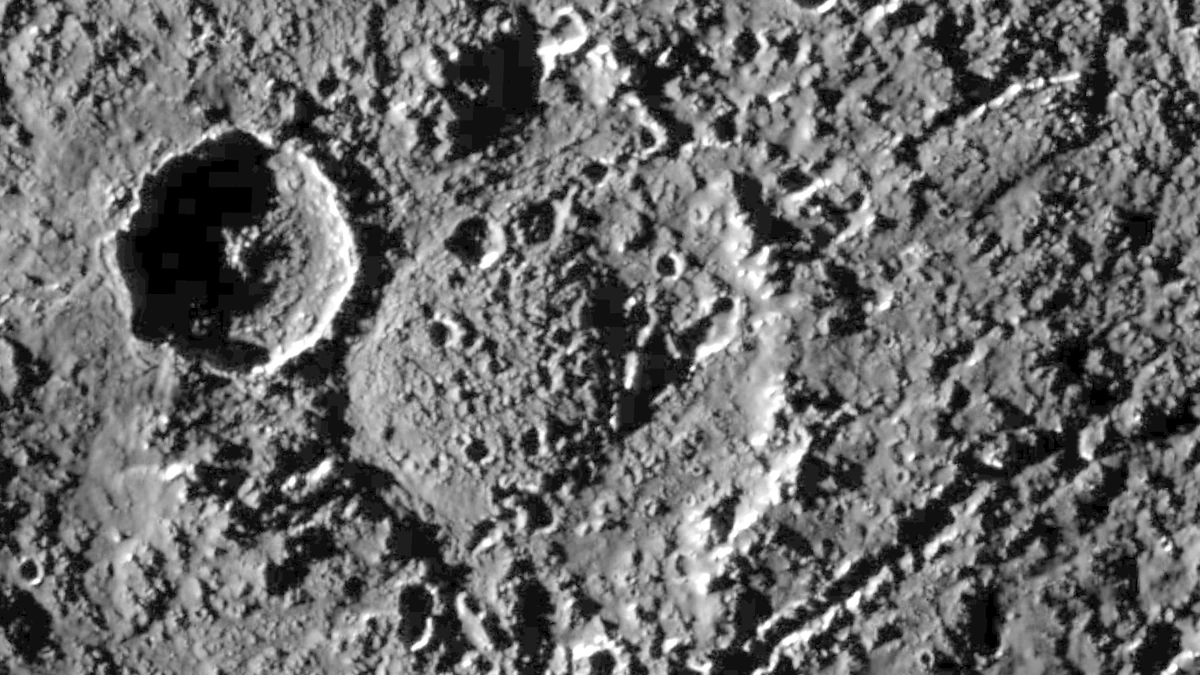
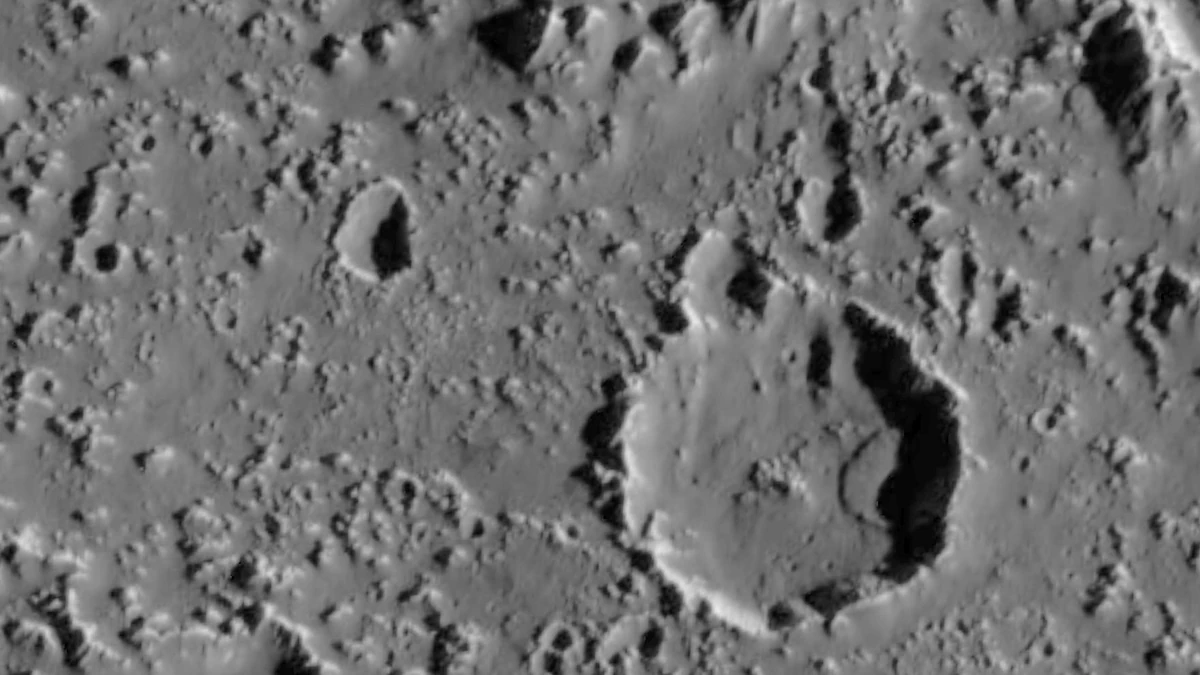
Callisto is not entirely frozen in time, though. Galileo found large landslide deposits inside two big craters, each about 3 to 3.5 km long. Material had slid down the crater walls and travelled several kilometres with no air to slow it, which could mean the surface material is very fine-grained.
What Is Valhalla on Callisto?
Valhalla is a giant bullseye, the largest multi-ring impact basin on Callisto. A bright central region about 600 km across is surrounded by rings of troughs, which could be fractures in the crust left by the impact. NASA gives the whole structure a diameter of 4,000 km, while a 2026 study measures 3,800 km including the outer troughs. Either way it is one of the largest impact features in the solar system, covering roughly 16% of Callisto's surface. Asgard is the second largest basin. NASA's Galileo team suggested the bright central plains may have formed when cleaner ice, or even liquid water, from below was thrown out and a fluid-like mass filled the crater bowl after the impact.
A January 2026 study in The Planetary Science Journal, led by Cole Meyer, used archive observations from ALMA, an array of radio dishes in Chile, to take Callisto's temperature. The centre of Valhalla read 5 to 11 K cooler than the team's model predicted (a kelvin is the same size as a degree Celsius). The authors link cool spots like this to denser material dug up by impacts, which warms more slowly in the daytime. They found no clear cooling over Asgard, though a cool spot just to its west may be a small crater.
Does Callisto Have an Ocean?
Very likely, but it is not confirmed. In the 1990s NASA's Galileo took magnetic readings near Callisto that suggested a salty ocean under the ice. The trouble was that Callisto's ionosphere, an electrically conductive layer in its upper atmosphere, could mimic an ocean's magnetic fingerprint.
In a paper published on 30 January 2025, Corey Cochrane and colleagues reanalysed readings from all eight of Galileo's close flybys. The ionosphere alone could not explain them, but an ionosphere together with a thick ocean could. They estimated the ocean is at least tens of kilometres thick, under an ice shell that could be tens to hundreds of kilometres thick, with rock below.
That puts a once seemingly dead moon on the list of worlds that might support life, as NASA puts it, though nobody has found any. Europa Clipper and Juice should make close-up measurements, and China's planned Tianwen-4 mission may also observe Callisto.
Can You See Callisto from the UK?
Yes, with binoculars. Callisto is about magnitude 6.8 now, brightening to about 5.8 by February 2027 as Jupiter moves closer to Earth. Smaller magnitude numbers are brighter, and Jupiter itself is about −1.9 now, rising to about −2.6 at its opposition on 11 February 2027. Callisto is the faintest of the four big moons, roughly 3 times fainter than Ganymede.
What helps is distance. Callisto strays further from Jupiter than any other big moon, up to about 7.4 arcminutes now (an arcminute is a sixtieth of a degree) and almost 10 arcminutes by February. Through 10x binoculars that widest gap looks about 1.2 degrees across, more than twice the width of the full Moon. Jupiter is about 3,000 times brighter now (about 2,200 times by February), but between 5 October 2026 and 12 February 2027 Callisto is more than 1 arcminute from Jupiter's centre about 92% of the time, so it is usually well clear of the glare.
Jupiter is in Leo and in the morning sky. It rises at about 02:13 BST in Birmingham on the night of 5 to 6 October, and between 04:43 and 06:04 BST it is more than 20° up while the Sun is still more than 12° below the horizon, before what astronomers call nautical twilight begins. UK clocks go back on 25 October. Our guide to how to see Jupiter in 2026 has the month-by-month detail, and the table shows how the window opens up towards opposition.
| Night | Jupiter rises | Best window (Jupiter above 20°, sky properly dark) | Due south | Height when due south (Plymouth, Birmingham, Edinburgh) |
|---|---|---|---|---|
| 5 to 6 October | 02:13 BST | 04:43–06:04 BST | 09:40 BST (daylight) | 55°, 53°, 49° |
| 1 to 2 November | 23:50 GMT | 02:18–05:49 GMT | 07:09 GMT (daylight) | 54°, 52°, 48° |
| 1 to 2 December | 22:05 GMT | 00:32–06:34 GMT | 05:20 GMT | 53°, 51°, 47° |
| 1 to 2 January | 20:00 GMT | 22:28–06:53 GMT | 03:17 GMT | 53°, 51°, 48° |
| 1 to 2 February | 17:40 GMT | 20:08–06:08 GMT | 01:03 GMT | 54°, 52°, 49° |
| 10 to 11 February (opposition) | 16:57 GMT | 19:26–05:30 GMT | 00:23 GMT | 55°, 53°, 49° |
Rising and due south times are for Birmingham. In Plymouth Jupiter rises about 15 minutes later and in Edinburgh about 5 to 7 minutes earlier, and due south times differ by less than 10 minutes across the three. The windows are ranges that hold across all three cities.
Tips for spotting Callisto
- Use steady 10x50 binoculars or bigger. Callisto is the faintest of the four, so a wobbly view hides it. Rest your elbows on a wall or a car roof, or use a tripod. Our guide to binocular astronomy covers the basics.
- Look at the far end of the line. The big moons orbit in almost the same plane, so they line up either side of Jupiter. Callisto is usually the one furthest out, because its orbit is the widest.
- Check it is not a star. Callisto is faint enough to be mistaken for a background star. A planetarium app such as Stellarium or SkySafari shows where each moon is on the night, and the moons swap places from night to night.
- Escape the streetlights. A faint moon next to a bright planet is easier from a dark site. Our UK dark sky sites map shows the nearest one.
- Do not expect detail. Callisto's disc is only 1.1 to 1.5 arcseconds across, so it stays a point of light even in a telescope, apart from perhaps the best nights with a large one.
If you want a first telescope, the Sky-Watcher Heritage 130P shows Jupiter's cloud belts and all four big moons, and it costs around £194 at First Light Optics. Our guide on stargazing for beginners is a good place to start, and what you can see in the sky tonight and the UK night sky this week help you plan.
Missions to Callisto: Galileo, Juice and Beyond
Galileo made the first in-depth study of Callisto, and Juice will study it in far more detail.
| Date | Mission | What it did or will do |
|---|---|---|
| 7 July 1979 | NASA Voyager 2 | Photographed Callisto from about 1.1 million km |
| 1995 to 2003 | NASA Galileo | Orbited Jupiter until the mission ended in 2003, and made eight close flybys of Callisto |
| 30 January 2025 | Study of Galileo data | Cochrane and colleagues concluded that Callisto very likely has a subsurface ocean |
| April 2030 | NASA Europa Clipper | Reaches Jupiter |
| July 2031 | ESA Juice | Reaches Jupiter |
| 2032 to 2034 | ESA Juice | 21 flybys of Callisto |
Juice launched on 14 April 2023 and made its third gravity assist, at Earth, on 28 September 2026. It will make 35 flybys of Ganymede, Europa and Callisto in total, then settle into orbit around Ganymede in December 2034. Juice carries a magnetometer, so its Callisto flybys can take magnetic readings close up, the kind of data that could settle the ocean question. AGU's science news service Eos reported in February 2025 that close-up measurements are scheduled for both Europa Clipper and Juice.
What you need to see Callisto
Kit we've reviewed in full
Callisto is the faintest of Jupiter's big moons, so a steady view and a little extra light help. Binoculars do the job, and a small telescope adds Jupiter's cloud belts.
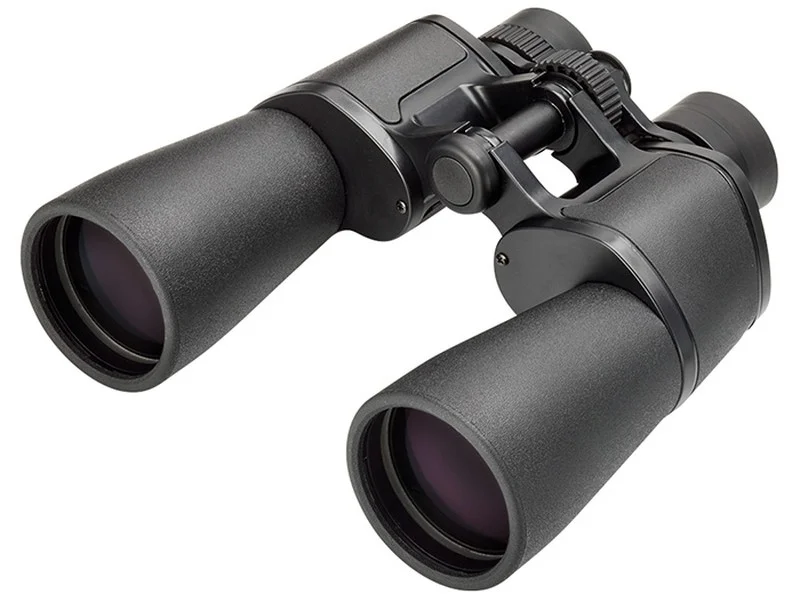
Ten times magnification and 50 mm lenses show Callisto as a faint dot at the end of the line of moons. Rest your elbows on a wall or a car roof to keep the view still.
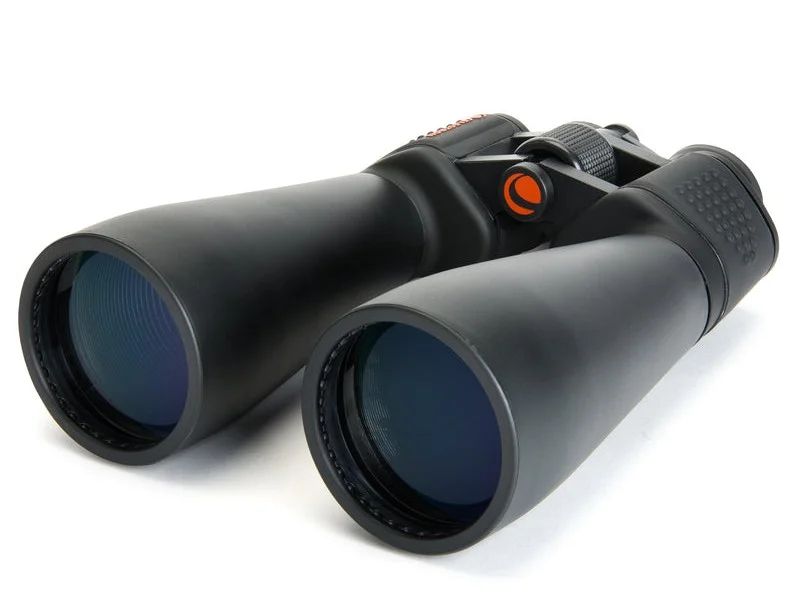
Bigger 70 mm lenses collect more light than 50 mm ones, which helps with the faintest moon. At 15 times magnification you will want a tripod or a firm rest.
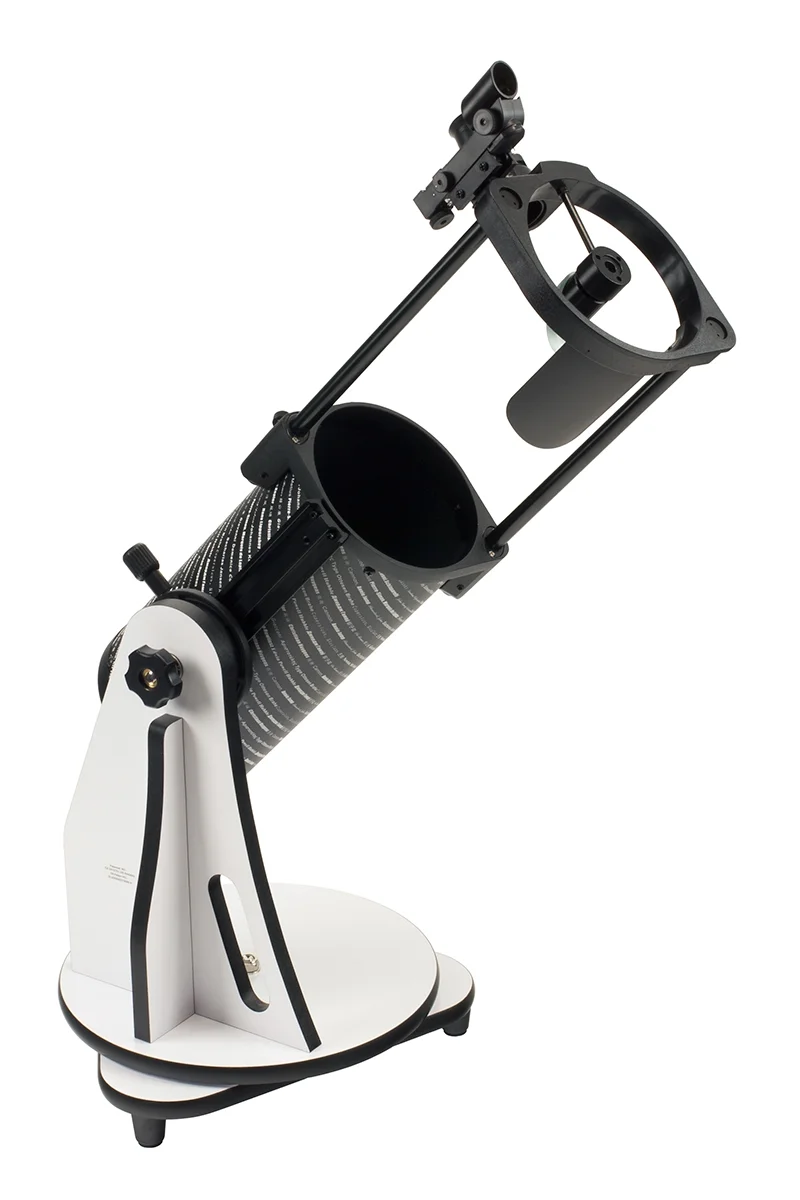
A 130 mm telescope shows Jupiter's cloud belts alongside all four big moons. Callisto stays a point of light, and the faintest of the four.
Affiliate links: you pay the same price, we earn a small commission that helps keep WatchTheStars free.
Frequently Asked Questions About Callisto
Images: NASA/JPL, NASA/JPL/DLR, NASA/JPL/University of Arizona and NASA/JPL/ASU. Main image: Galileo's global colour view of Callisto, taken in May 2001 (PIA03456), the only complete global colour image Galileo took of it. Sky positions for the UK computed with Skyfield and JPL Horizons.