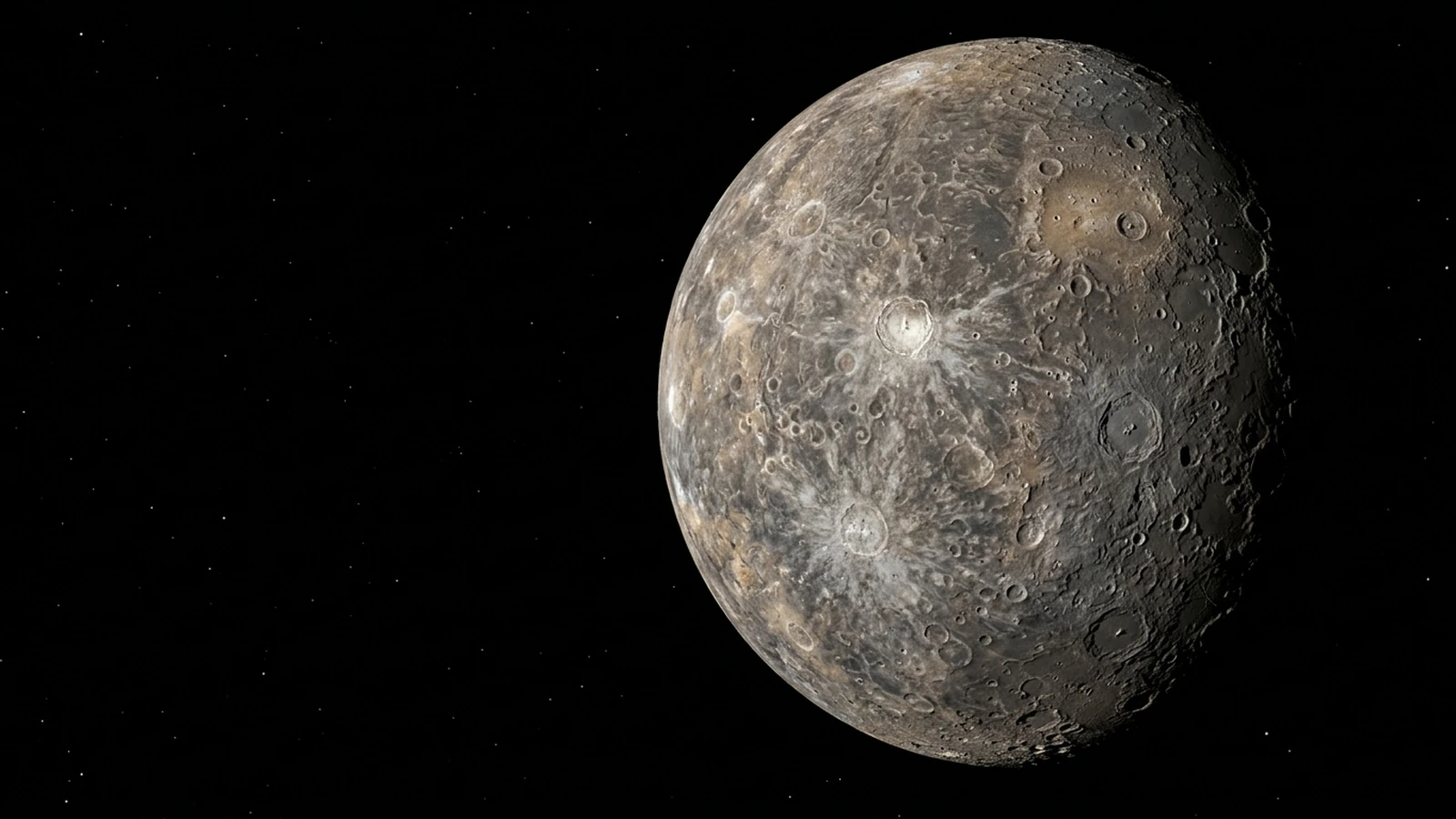
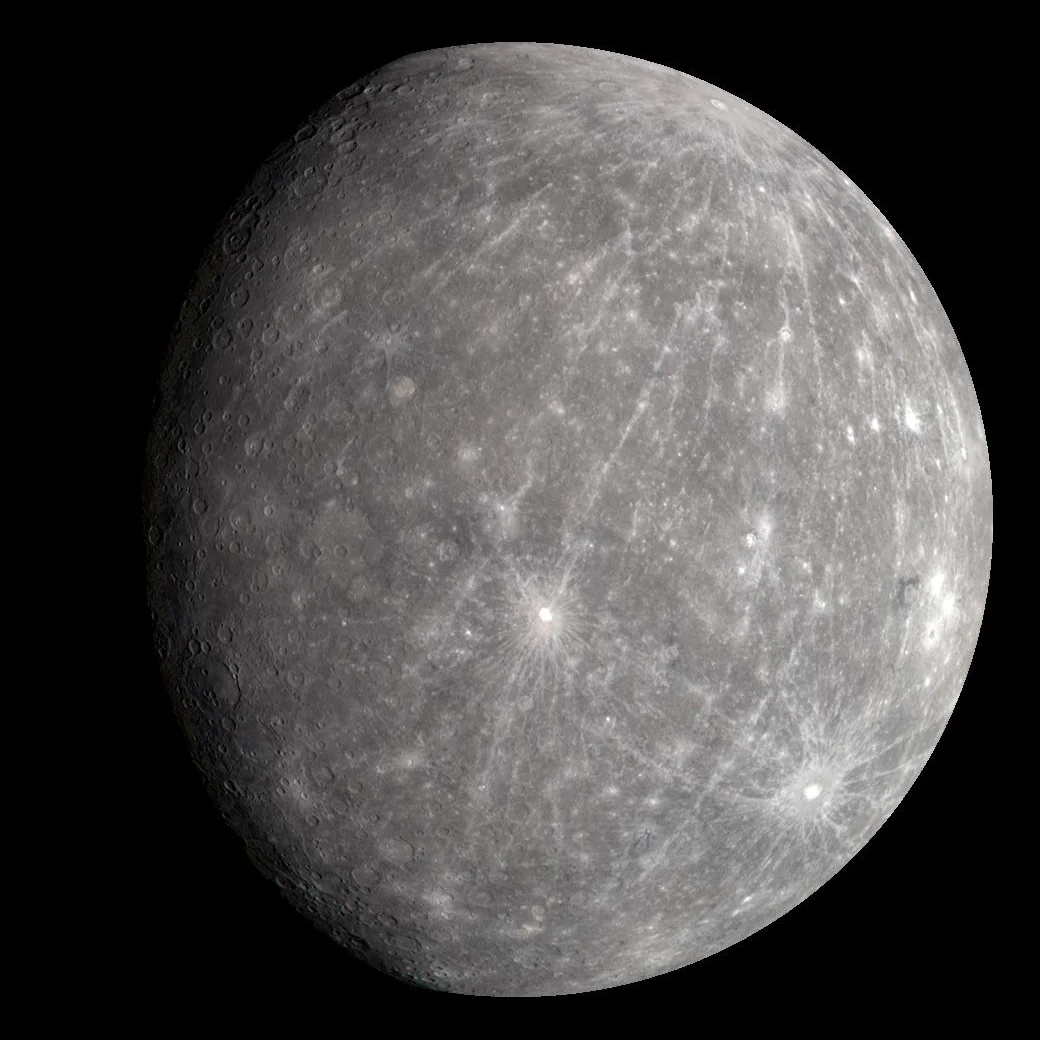
Key takeaways
- BepiColombo's Mercury Transfer Module separated from the two science orbiters on 3 September 2026, at about 1pm UK time, after nearly eight years in space
- ESA confirmed the spacecraft was healthy when its signal arrived at the Cebreros deep-space antenna in Spain about two hours later
- Mercury's gravity captures the orbiters on 21 November 2026. They split from each other in December and science starts on 6 April 2027
- BepiColombo is a joint ESA and JAXA mission and only the second ever to orbit Mercury. The European orbiter was built in Stevenage
- You can't see Mercury from the UK this month, and the October evening apparition is hopeless from our latitude too. The morning showing of 15 to 25 November is the one to wait for
Jump to section 6 sections
Nearly eight years after it left Earth, Europe's mission to Mercury has started its arrival. At about 1pm UK time today, 3 September 2026, BepiColombo's Mercury Transfer Module let go of the two science orbiters it has been carrying since 2018. ESA's mission control in Darmstadt then waited close to two hours for a radio signal to confirm that everything had worked. It had.
That makes this the first step in what ESA calls one of the hardest arrival sequences it has ever attempted. Here's what happened, why it took so long, and when the planet Mercury finally gets its new pair of orbiters.
BepiColombo Separation: What Happened on 3 September
BepiColombo has flown as one stacked spacecraft since launch. At the bottom sat the Mercury Transfer Module (MTM), a European-built engine section with four ion thrusters and two enormous solar wings. Above it rode the two orbiters: ESA's Mercury Planetary Orbiter (MPO) and JAXA's Mercury Magnetospheric Orbiter, known as Mio.
The MTM's job was to do the driving. Today it finished. Separation was commanded for 14:00 Central European time (1pm BST), with ESA streaming the event live from the main control room at its European Space Operations Centre (ESOC).
Then came the wait. BepiColombo is about 200 million kilometres from Earth, and after separation the orbiters had to settle, point their antenna and call home. The earliest the signal could arrive was 14:53 UK time. ESA's Cebreros deep-space antenna in Spain picked it up, and the first checks showed a healthy spacecraft. Lead project scientist Geraint Jones called it "a brilliant moment."
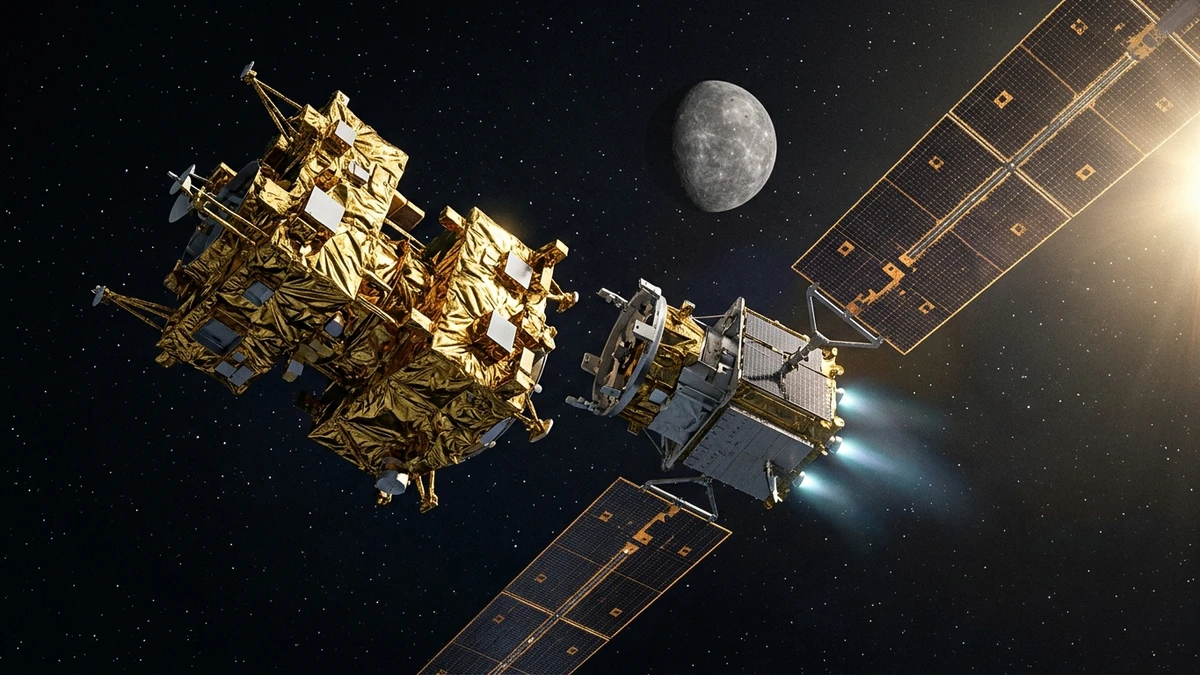
The MTM itself is now spent. It has no science instruments and will drift on in its own orbit around the Sun. The orbiters, still joined together, have about 3 million kilometres left to travel.
What Is BepiColombo and Why Did It Take Eight Years?
BepiColombo is a joint mission between the European Space Agency and Japan's space agency, JAXA. It launched on an Ariane 5 from French Guiana on 20 October 2018, and it is the first Mercury mission for both Europe and Japan. It's also only the second spacecraft ever to orbit Mercury, after NASA's MESSENGER, which circled the planet from 2011 to 2015.
The mission is named after Giuseppe "Bepi" Colombo, the Italian mathematician who worked out how Mariner 10 could use a Venus flyby to visit Mercury three times in the 1970s. There's a strong UK link too. The MPO orbiter was built by Airbus in Stevenage, and the University of Leicester led one of its instruments, an X-ray spectrometer called MIXS.
So why eight years? Getting to Mercury is much harder than it looks. The planet sits deep in the Sun's gravity well, so a spacecraft falling inwards from Earth picks up a huge amount of speed. Unless it can shed that speed, it shoots straight past. There's no thick atmosphere to brake against either, unlike at Mars.
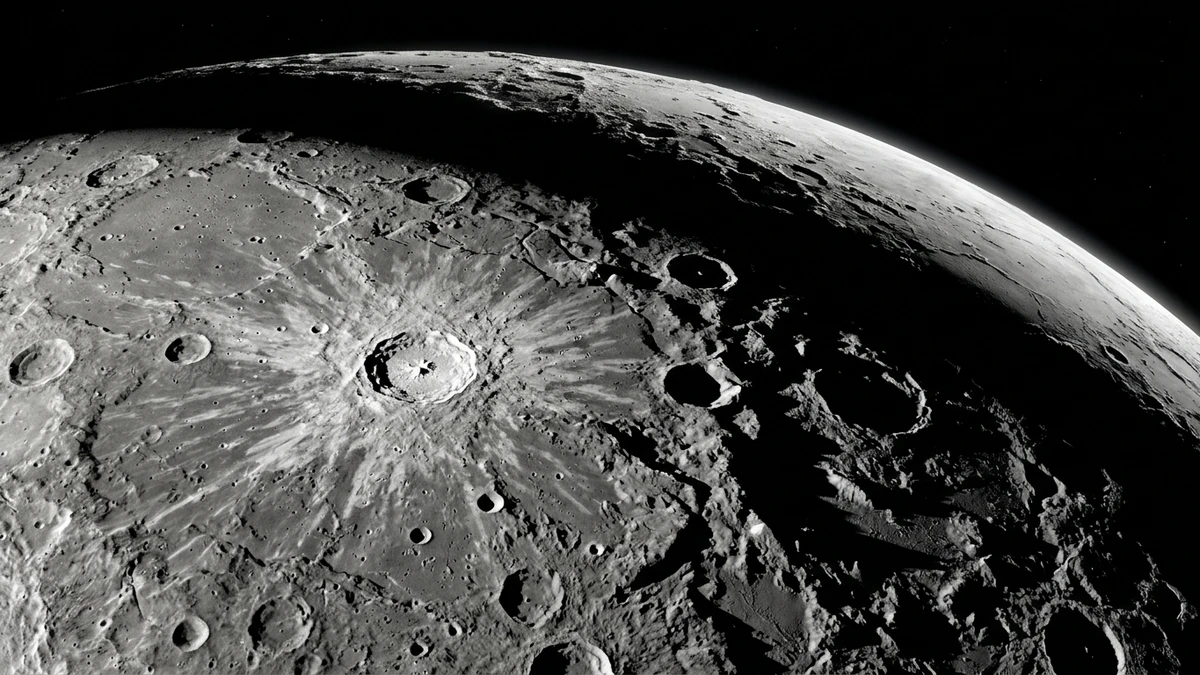
BepiColombo's answer was to take the long way round. It made nine planetary flybys: one of Earth in April 2020, two of Venus in 2020 and 2021, and six of Mercury itself between 2021 and January 2025. Each pass bled off a little speed. In between, the MTM's ion thrusters ran for months at a time, pushing with roughly the force of a coin resting on your hand.
The thruster fault that cost 11 months
It nearly took even longer. In April 2024 the MTM's ion thrusters started losing power. Engineers traced it to unexpected electrical currents between the solar arrays and the unit that distributes power around the spacecraft. By early May they had recovered about 90% of full thrust, but no more.
Rather than risk the mission, ESA's flight dynamics team redrew the route. The fifth Mercury flyby was moved 35 km closer to the planet to save fuel, and arrival slipped from December 2025 to November 2026. The science plan survived intact, which is why today's milestone matters so much to the people who have nursed this spacecraft through the last two years.
BepiColombo Arrival Timeline: When Does It Reach Mercury Orbit?
Today's separation is the opening move in a sequence that runs into next spring. The key dates, all from ESA and JAXA:
| Date | Event |
|---|---|
| 3 September 2026 | Mercury Transfer Module separates from the two orbiters |
| 21 November 2026 | Mercury's gravity captures the joined MPO and Mio orbiters |
| 9 or 10 December 2026 | MPO releases Mio into its own polar orbit |
| Mid-December 2026 | MPO begins lowering itself towards its final orbit |
| 10 March 2027 | MPO reaches its final orbit, 480 km by 1,500 km above Mercury |
| 6 April 2027 | Science operations begin for both orbiters |
Mio's orbit is a long, stretched ellipse that swings from 590 km out to 11,640 km. That takes it right through Mercury's magnetosphere, the bubble of magnetic field around the planet, which is exactly what it was built to measure. MPO stays much closer in, which suits a spacecraft designed to map the surface.
Both orbiters are due to work for at least one Earth year. Given how long everyone has waited, you can expect ESA to squeeze out every extra month it can.
Catch Mercury from your garden this November
Kit we've tested and reviewed in full
BepiColombo needed eight years and nine flybys to get to Mercury. You need a clear east-south-east horizon about 45 minutes before sunrise in the second half of November. Binoculars turn a hopeless hunt into an easy one, and a small telescope will show you Mercury's half-lit phase.

Bright, wide-field 10x50s that pick Mercury out of twilight long before your eyes can. Light enough to hold steady while you sweep the horizon.

A step up in optical quality for the same job. Better contrast in a bright twilight sky, which is exactly where Mercury lives.
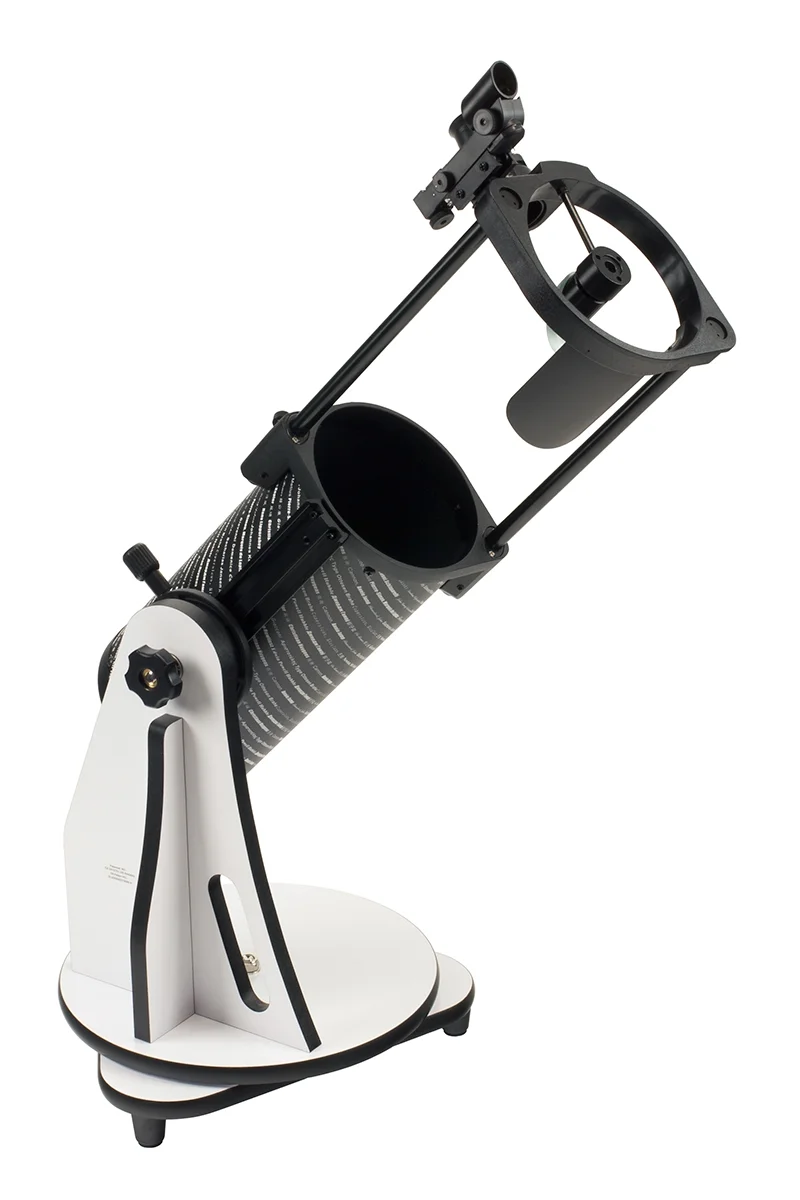
Enough aperture to show Mercury as a tiny half-moon, plus Saturn's rings later in the same evening. Sits on a table, no tripod needed.
Affiliate links: you pay the same price, we earn a small commission that helps keep WatchTheStars free.
What Will BepiColombo Study at Mercury?
Mercury is the least explored rocky planet in the solar system. Mariner 10 flew past three times in 1974 and 1975 and saw less than half the surface. MESSENGER mapped the whole planet, but it orbited over the northern hemisphere and its view of the south was poor. BepiColombo brings two spacecraft, 16 instruments, and a better orbit.
The big questions it wants to answer:
- Is Mercury's interior still molten? The planet has an iron core that takes up about 85% of its radius, far more than any other planet. MPO will measure tiny wobbles in Mercury's rotation to find out how much of that core is liquid.
- Why does Mercury have a magnetic field at all? It's the only rocky planet apart from Earth with a global field, but it's about 100 times weaker than ours and oddly offset from the centre. Mio will map it in detail.
- What is the surface made of? MPO will chart minerals and chemical elements across the whole planet. The Leicester-built MIXS instrument reads X-rays given off by the surface when the Sun's radiation hits it.
- Is there really ice at the poles? Radar from Earth and MESSENGER data both suggest water ice sits in permanently shadowed craters near Mercury's poles, on a planet where the daytime surface reaches 430°C. BepiColombo should settle it.
There's a bonus for physicists. Mercury's orbit is the classic test of Einstein's general relativity, and BepiColombo's precise tracking will put the theory through its toughest test yet at a planet.
How to See Mercury From the UK This Autumn
Here's the honest bit. You can't see Mercury from the UK this month. It passed behind the Sun on 27 August and is now creeping into the evening sky, but from our latitude it hugs the horizon in bright twilight all September. Don't waste an evening on it.
October is no better, whatever the US sites say. Mercury reaches greatest eastern elongation on 12 October 2026, 25° from the Sun at magnitude −0.1, but the autumn evening ecliptic lies almost flat along the UK horizon. We ran the numbers for London, Plymouth and Edinburgh: Mercury is barely 3° up as the Sun sets and it is gone about 25 minutes later, before the sky is anywhere near dark. Don't waste an evening on that one either.
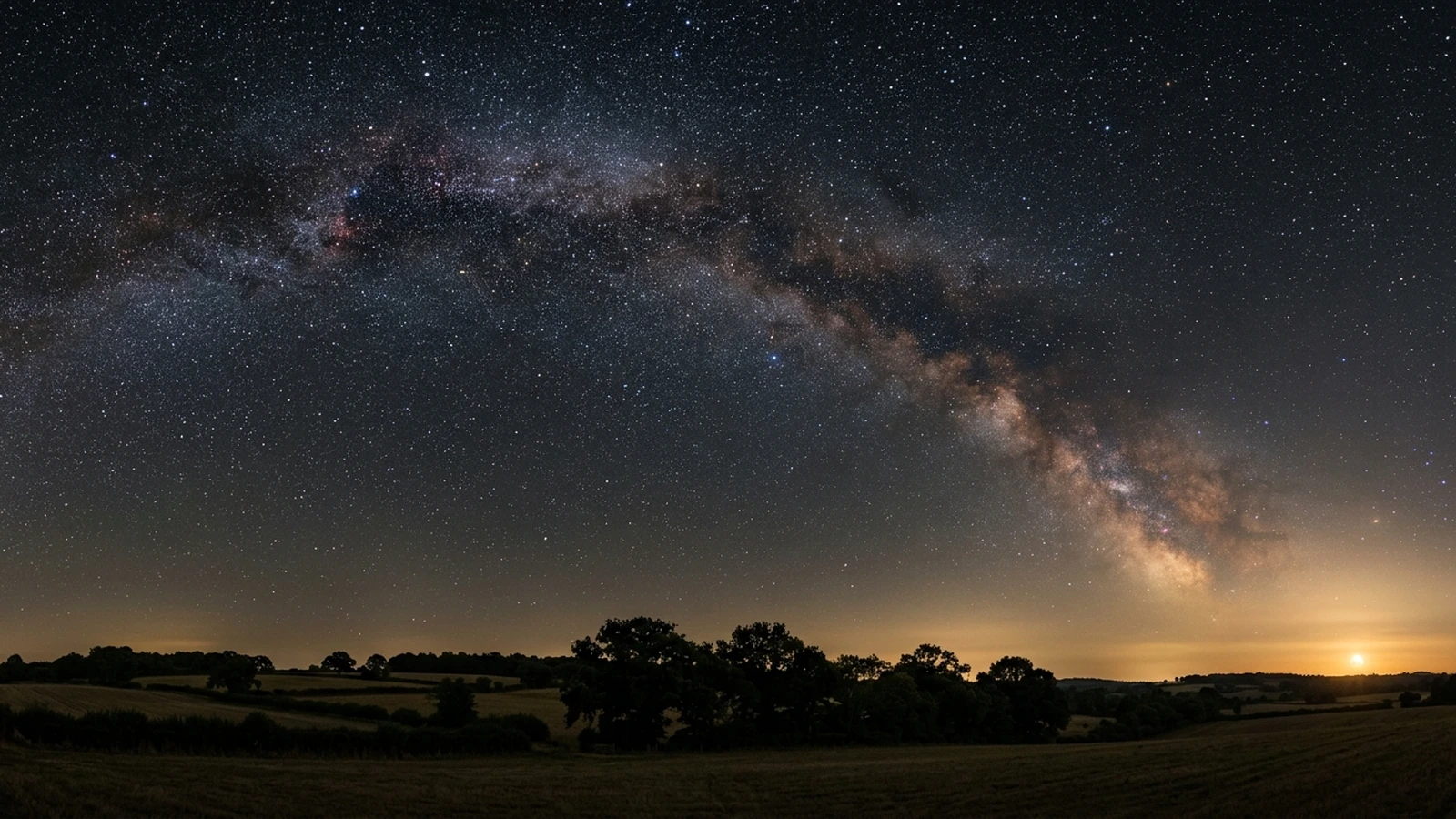
The morning apparition around 20 November is the one to wait for. Between about 15 and 25 November Mercury stands 8–10° above the east-south-east horizon 45 minutes before sunrise (roughly 6.40am), shining at magnitude −0.5 in a properly dark sky. You'll need a flat horizon with no trees or buildings, and binoculars help you pick it up early. Never sweep for Mercury once the Sun is up. Our guide to observing the Sun safely explains why. The full month-by-month breakdown is in our guide to how to see Mercury in 2026.
If you're new to this, Mercury is a satisfying tick. Plenty of experienced astronomers have never seen it, simply because it's so easy to miss. Our stargazing for beginners guide covers the basics, and you can check what you can see in the sky tonight before you head out. Both arrival dates, 21 November and the December split, are in our astronomy events calendar, and we'll flag them in the UK night sky this week round-up when they come round.
The Bottom Line
BepiColombo has spent eight years, nine flybys and one nasty thruster scare getting to the doorstep of the least visited rocky planet in the solar system. Today it dropped the engine that got it there. In eleven weeks Mercury's gravity takes over, and by next April two spacecraft, one built an hour up the A1 from London, will be doing science at the planet closest to the Sun.
We'll cover the November capture and the December separation when they happen. In the meantime, put the third week of November in your diary, set an early alarm, and go and see the planet for yourself.
Sources:
- Watch live: BepiColombo begins its arrival at Mercury · ESA
- 2 spacecraft headed to Mercury are about to begin their long-awaited arrival · Space.com
- Two Mercury-bound spacecraft draw closer to planet after near decade-long voyage · PA / The Irish News
- Thruster issues delay BepiColombo probe's Mercury arrival until November 2026 · Space.com
- BepiColombo overview · ESA
Frequently Asked Questions
Equipment guides
Related topics

Ian ClaytonAmateur astronomer and founder of WatchTheStars.co.uk, dedicated to helping others explore the wonders of our universe. Full profile →