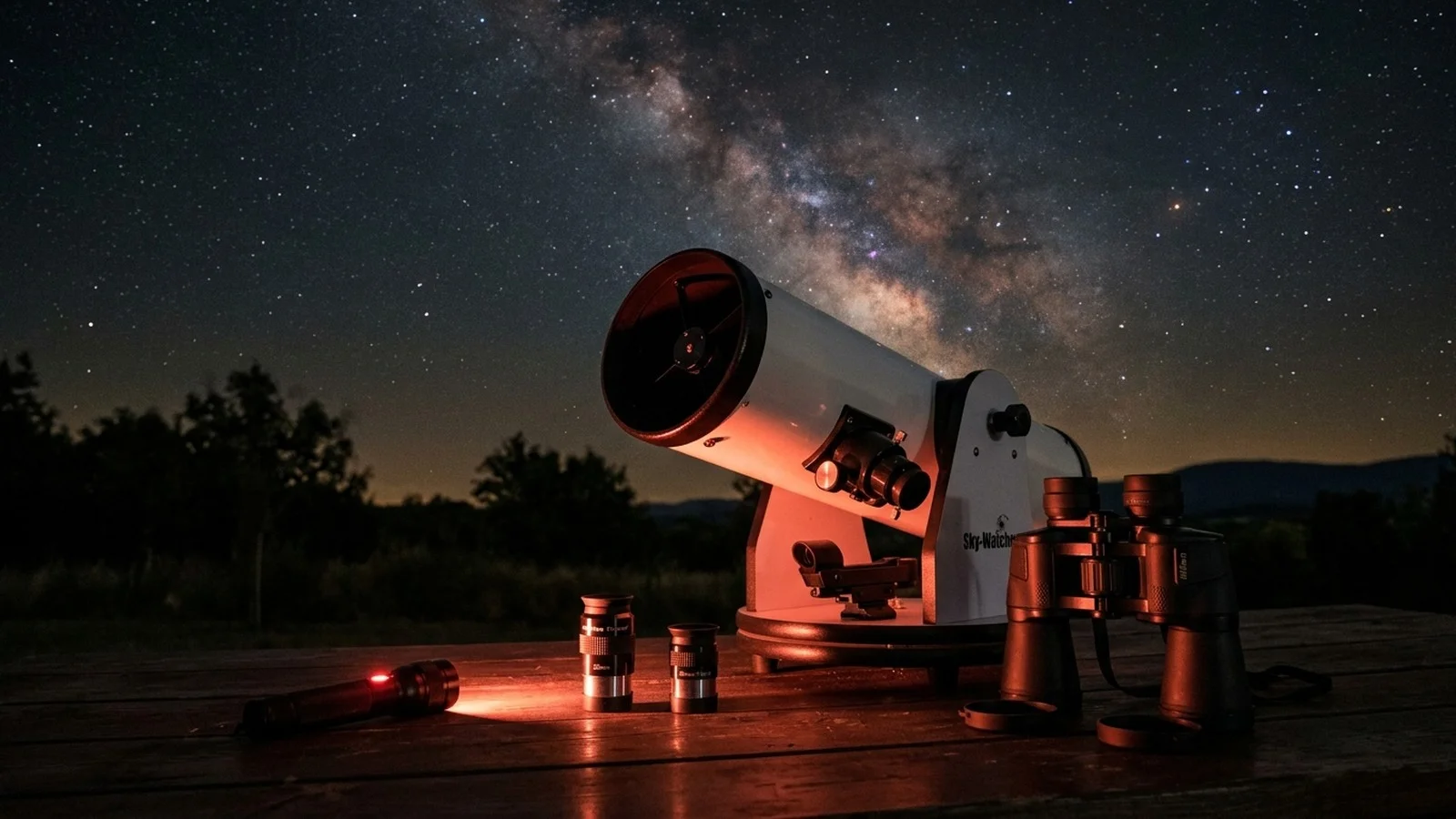
Celestron vs Sky-Watcher: which beginner telescope brand should you buy?
Short answer: for most UK beginners Sky-Watcher wins, because its tabletop Dobsonians give more aperture per pound than anything Celestron makes at the same price. The Sky-Watcher Heritage 150P at £249 gathers a third more light than the Celestron StarSense Explorer DX 130AZ at £429. Celestron wins when convenience is the point: the StarSense app guides your phone-docked telescope to the target, and the NexStar 6SE finds and tracks 40,000 objects on its own, which no Sky-Watcher Dobsonian does. Both brands are sold by First Light Optics with a UK warranty, both are owned by the same parent company, and the right answer depends on whether you would rather see more or hunt less.
| At a glance | Celestron | Sky-Watcher |
|---|---|---|
| Known for | GoTo Schmidt-Cassegrains, phone-guided StarSense, SkyMaster binoculars | Dobsonians, Newtonians, ED refractors, equatorial mounts |
| Cheapest telescope we recommend | StarSense Explorer DX 130AZ, £429 | Heritage 130P, £194 |
| Aperture per pound | Lower; you pay for electronics | Higher; you pay for mirror |
| Finding targets | Phone app or GoTo hand controller | Push-to with a chart or app; GoTo on Skymax and mounts |
| Power needed | NexStar yes (8 AA or a power tank); StarSense no | Dobsonians no; AZ-GTi and SynScan mounts yes |
| Collimation | Rarely on NexStar SCTs; occasional on the DX 130AZ | Occasional on Heritage and Skyliner; never on Evostar and Skymax |
| UK distributor | David Hinds Ltd | Optical Vision Limited |
| Resale in the UK | Good; electronics age | Excellent; Dobsonians sell in days |
Celestron vs Sky-Watcher for a first telescope: StarSense Explorer DX 130AZ vs Heritage 150P
The Heritage 150P is the better first telescope for most people, and the StarSense Explorer DX 130AZ is the better one for anyone who dreads not being able to find anything. Both have a parabolic mirror, which is the thing that separates a real telescope from a toy. The Celestron's is 130mm on a steel tripod with slow-motion controls and a phone dock; the Sky-Watcher's is 150mm on a tabletop Dobsonian base with a collapsing tube. The 150P gathers 33 per cent more light and costs £180 less, which means brighter star clusters, more of the Orion Nebula and a more forgiving view of faint galaxies from a dark site. If the budget is tighter still, the Sky-Watcher Heritage 130P at £194 matches the Celestron's aperture for less than half its price.
What the Celestron buys you is the app. Dock a compatible phone, and the StarSense Explorer app looks at the sky through the camera, works out where the telescope is pointing and draws an arrow to the target. For a beginner in a light-polluted town who cannot see enough stars to star-hop, that is the difference between a telescope that gets used and one that goes in the loft. Check Celestron's phone compatibility list before you buy, because the app is the whole point. Our telescopes for children guide puts the 150P first for ages 8 to 12 and the StarSense first for teenagers for exactly this reason, and stargazing for beginners teaches the finding skills the Sky-Watcher assumes.
First telescope: StarSense Explorer DX 130AZ vs Heritage 150P
Kit we've reviewed in full
Both are reflectors with a parabolic mirror. One finds targets for you with your phone; the other gathers a third more light for £180 less.
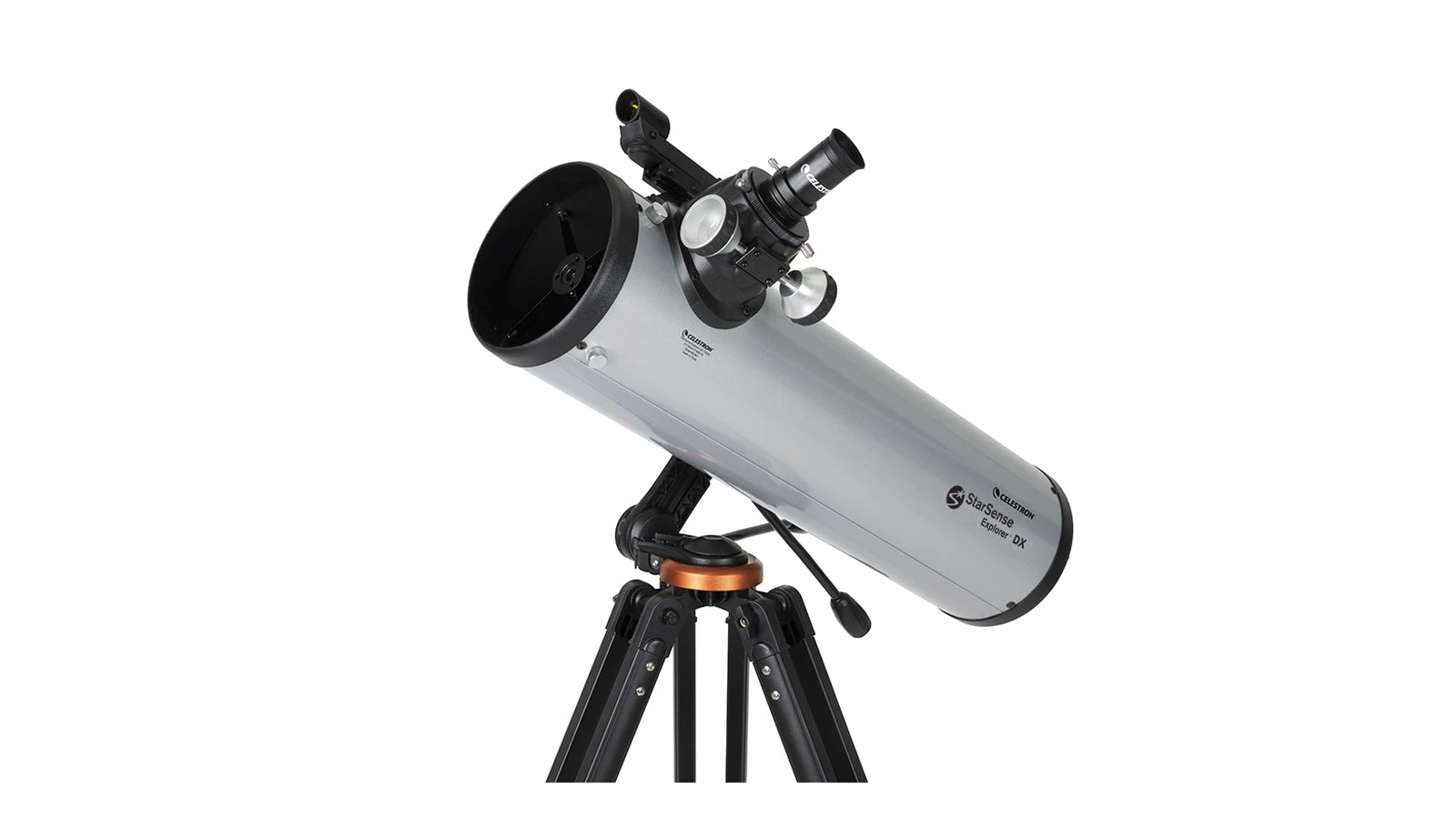
Celestron StarSense Explorer DX 130AZ
130mm f/5 on a steel tripod with slow-motion controls. Dock your phone and the app draws arrows to the target. Check your phone is on Celestron's compatibility list.
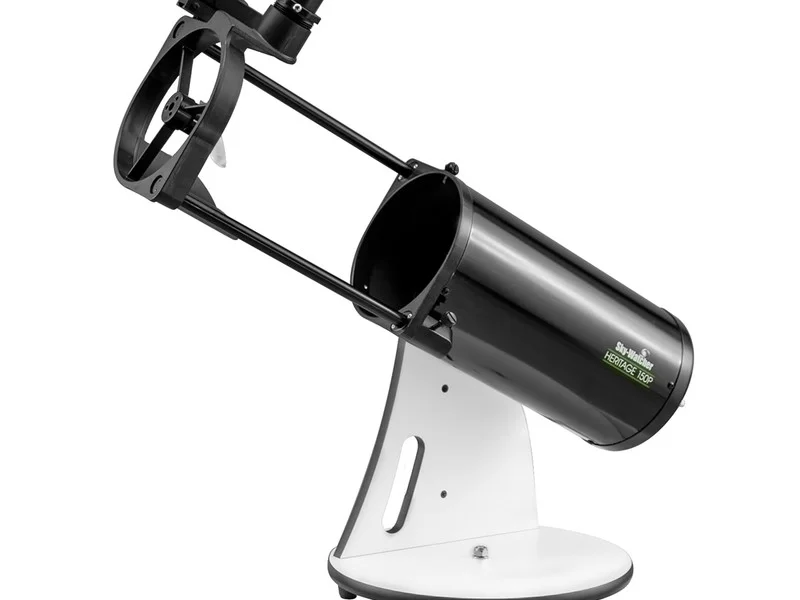
150mm f/5 tabletop Dobsonian. Brighter clusters, more nebula detail, nothing to align or charge. You find targets yourself with a star chart or app.
Affiliate links: you pay the same price, we earn a small commission that helps keep WatchTheStars free.
Celestron vs Sky-Watcher step-up telescopes: NexStar 6SE vs Skymax 127 and Skyliner 200P
At the step-up level the choice is between Celestron's NexStar 6SE at £1,199 and two Sky-Watchers that each beat it on one thing: the Skymax 127 at £547 and the Skyliner 200P at £341. The 6SE is a 150mm f/10 Schmidt-Cassegrain on a GoTo fork mount: align it on three stars and it finds and tracks anything in its 40,000-object database. It is the best all-round GoTo telescope for a beginner, and it needs a power supply and the £49 dew shield from the first night.
The Skymax 127 is the planetary rival. It is a 127mm Maksutov with the same 1500mm focal length as the 6SE, bundled with the AZ-GTi GoTo mount that you drive from your phone, for under half the price. On Jupiter, Saturn and the Moon the view is close to the 6SE's; on faint deep-sky objects the 6SE's extra 23mm of aperture and the Mak's narrower field tell. The Skyliner 200P is the aperture rival. Its 200mm mirror gathers 1.8 times the light of the 6SE for less than a third of the money, so globular clusters resolve and galaxies show structure, but you find everything yourself and nudge the tube along as the sky turns. Our best beginner telescopes UK guide ranks all three, and how to use a telescope covers both the three-star GoTo alignment and the Dobsonian nudge.
Step-up: NexStar 6SE vs Skymax 127 vs Skyliner 200P
Kit we've reviewed in full
Three ways to spend between £340 and £1,200. GoTo Schmidt-Cassegrain, GoTo Maksutov, or the biggest manual mirror the money buys.
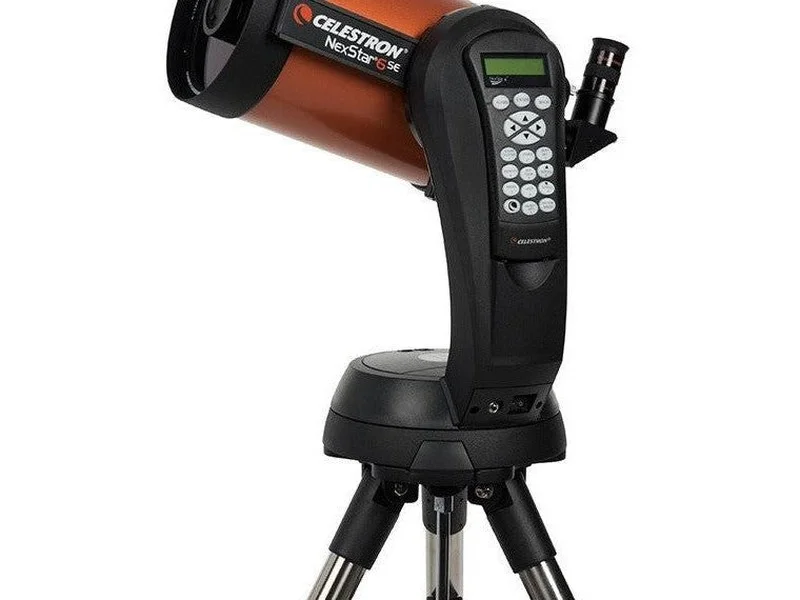
150mm, 1500mm focal length, 40,000-object GoTo with tracking. Planets, double stars and globular clusters without hunting. Needs power and a dew shield.
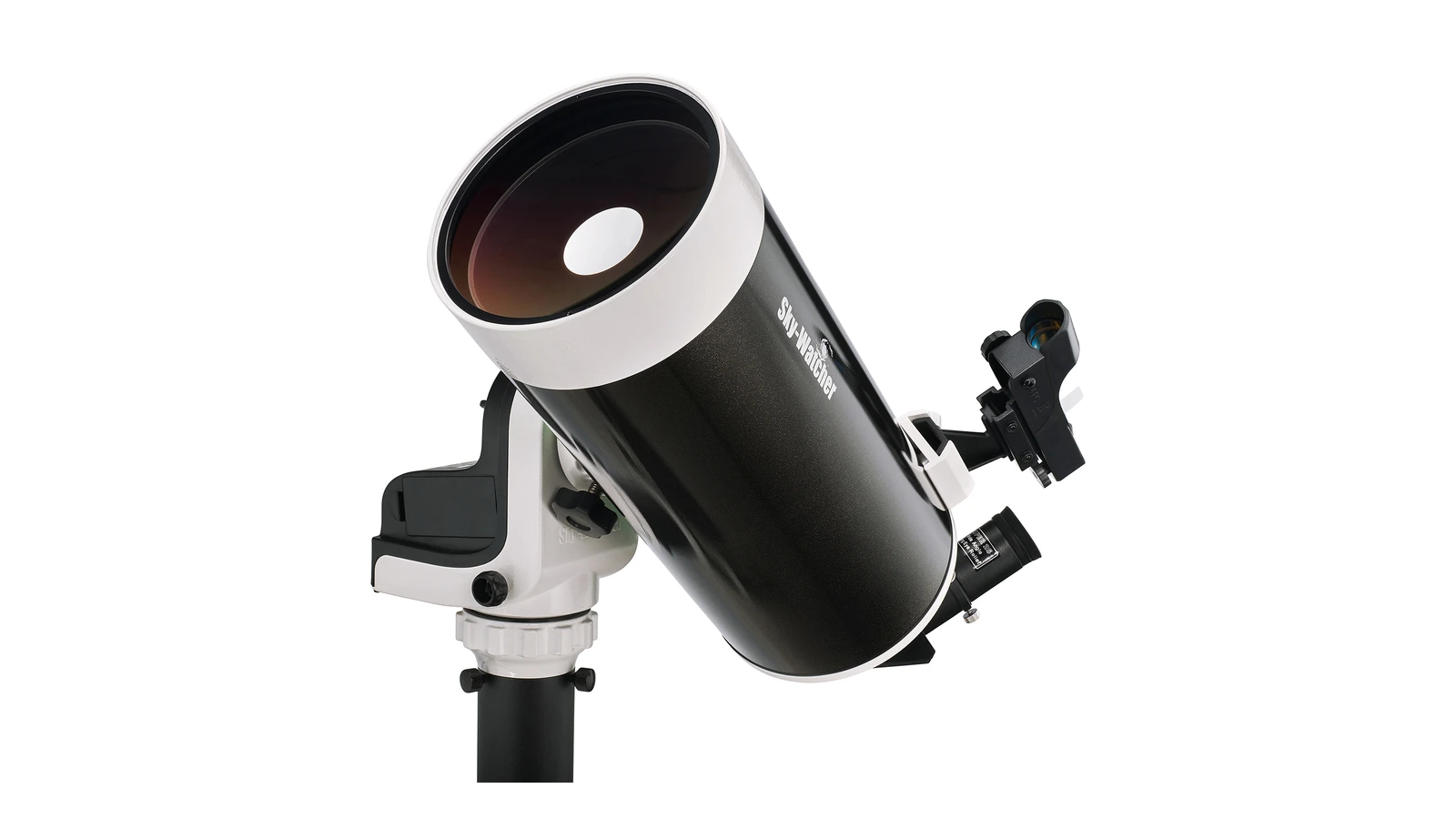
127mm Maksutov at 1500mm on the AZ-GTi GoTo mount, driven from your phone. Nearly the 6SE's planetary view at under half the price. 3.4kg tube.
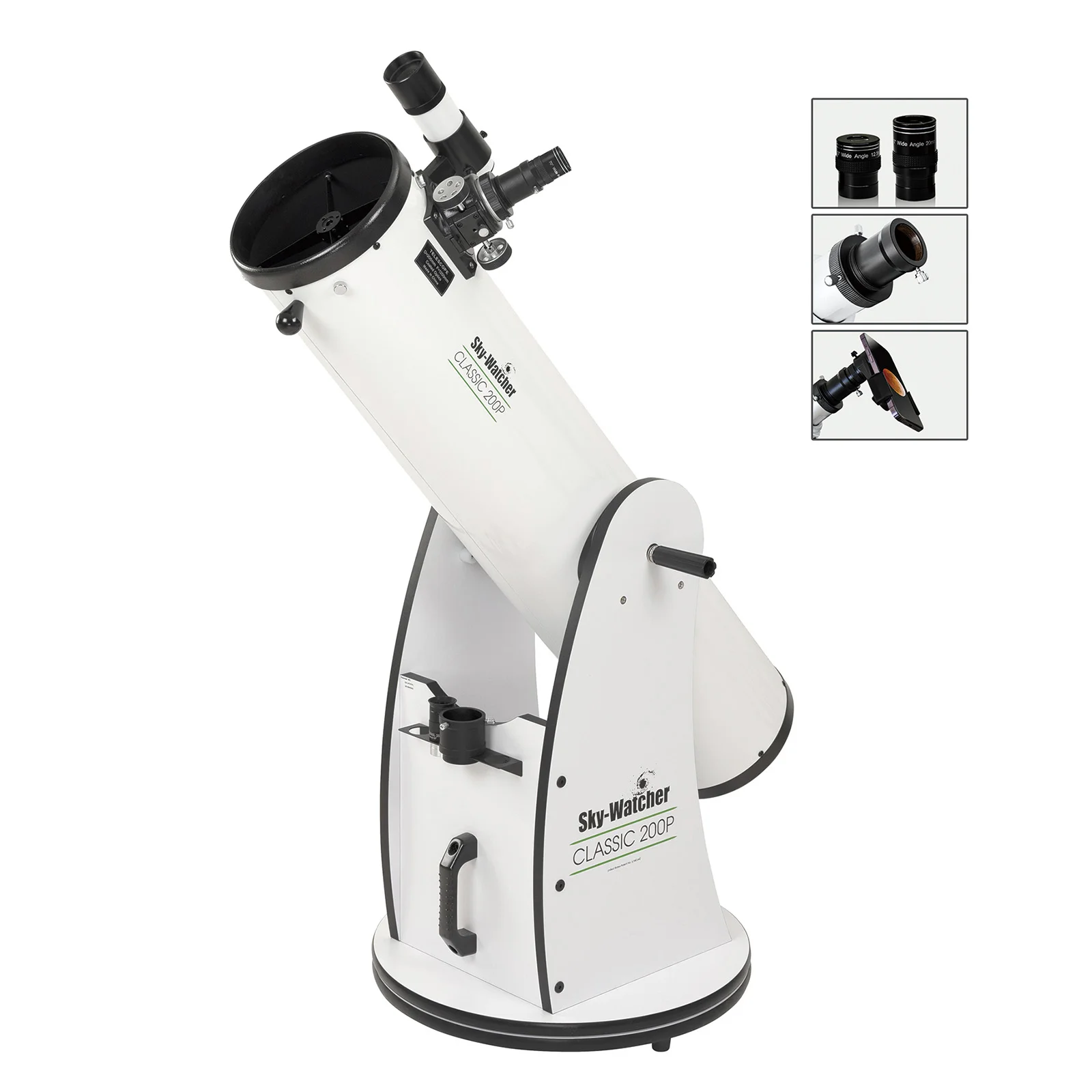
200mm manual Dobsonian. Gathers 1.8 times the light of the 6SE for less than a third of the money. You do the finding and the nudging.
The full Sky-Watcher range explained
Honest, research-based recommendations for every budget.
Browse all →Affiliate links: you pay the same price, we earn a small commission that helps keep WatchTheStars free.
Celestron SkyMaster vs Opticron and Helios binoculars
Celestron's SkyMaster binoculars are the big-aperture option and the Opticron and Helios 10x50s are the better first pair. The SkyMaster Pro 15x70 at £229 gathers nearly twice the light of a 50mm pair and shows the Andromeda Galaxy and comets beautifully, but at 1.5kg and 15x magnification it needs a tripod, so it is really a small telescope for two eyes. The SkyMaster Pro ED 7x50 at £189 is the hand-held Celestron, with a wide 7.1-degree field. Against them, the Opticron Adventurer 10x50 at £84 is our highest-rated budget pair, and the Helios Stellar-II 10x50 at £149 is the sharpest 10x50 we review. Both can be held steady with braced elbows and both work for birds by day. Our guide to the best binoculars for stargazing compares all five, and binocular astronomy lists what to look at first.
Binoculars: Celestron SkyMaster vs Opticron and Helios
Kit we've reviewed in full
Celestron's SkyMaster range is big-aperture and tripod-bound; the Opticron and Helios 10x50s are hand-held and the better first pair.
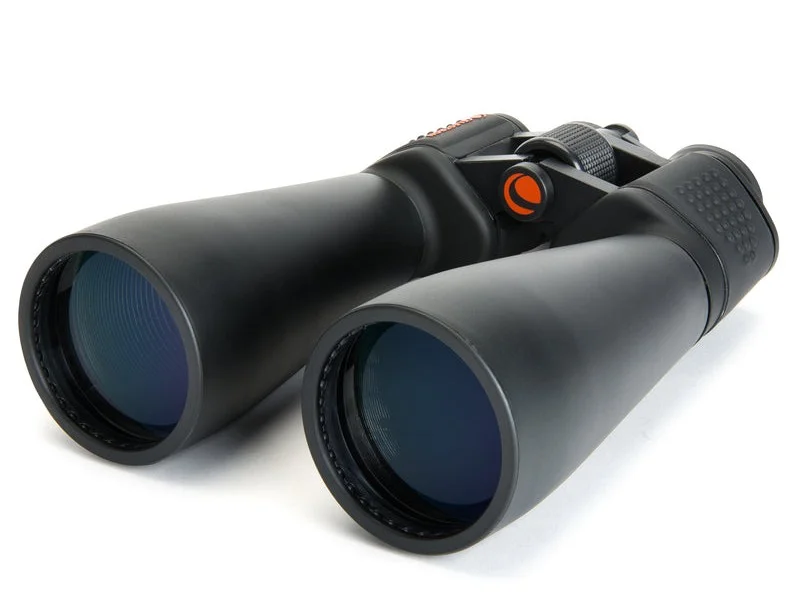
70mm lenses gather nearly twice the light of a 50mm pair. Galaxies and comets come alive, but at 1.5kg and 15x you need a tripod.
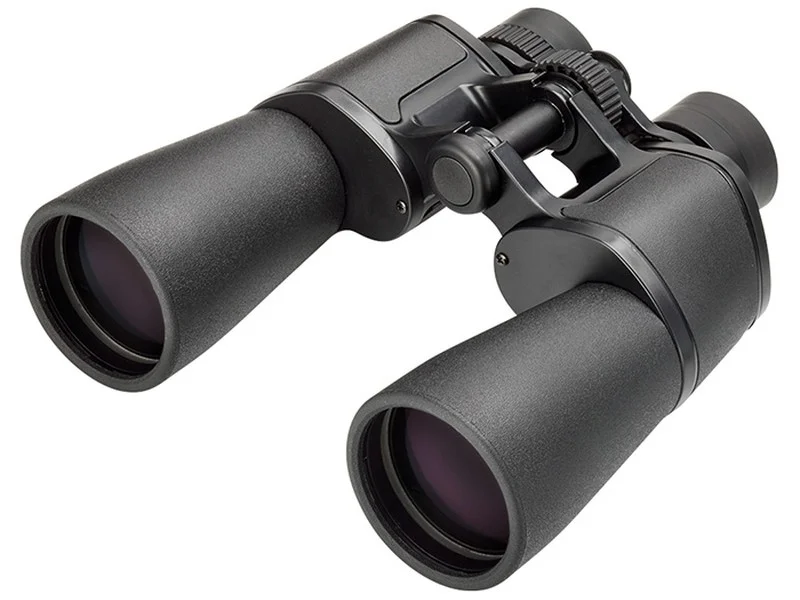
Our highest-rated budget binocular. Light enough to hold steady, wide enough for the Milky Way, and usable for birds by day.
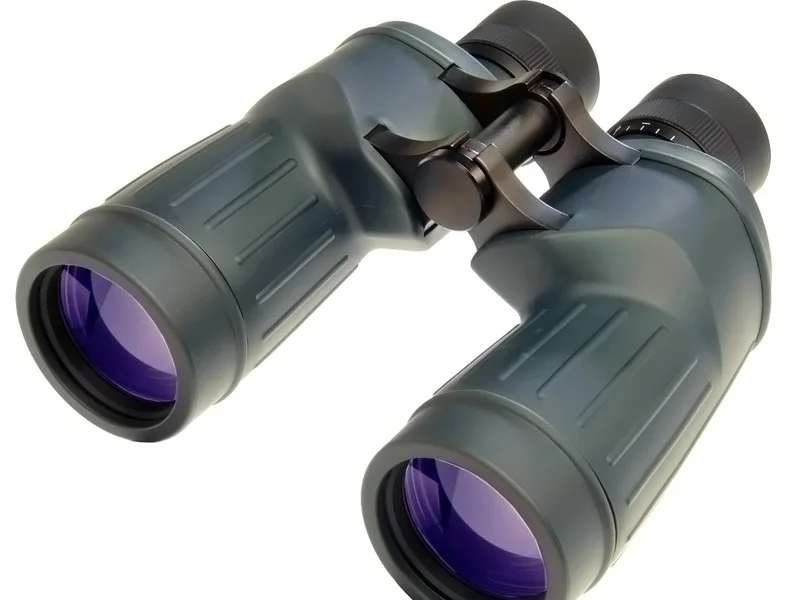
Individual-focus eyepieces, waterproof, and the sharpest 10x50 view under £150. The pair serious observers keep.
Best binoculars for stargazing
Honest, research-based recommendations for every budget.
Browse all →Affiliate links: you pay the same price, we earn a small commission that helps keep WatchTheStars free.
GoTo vs push-to: apps, hand controllers and star charts
GoTo means motors find and track the target; push-to means you move the telescope and something tells you where you are. Celestron's NexStar SE mounts are GoTo with a hand controller, and Celestron's StarSense Explorer is push-to with your phone as the guide. Sky-Watcher's Dobsonians are plain push-to with no help at all beyond a red-dot finder and a chart, while its Skymax 127 bundle, AZ-GTi, Star Adventurer GTi, EQ5 Pro and HEQ5 Pro are GoTo driven from the SynScan app on your phone. So the honest comparison is not "Celestron has GoTo and Sky-Watcher does not"; it is that Celestron puts the computer in the entry-level telescope and Sky-Watcher puts the money into the mirror and sells the computer separately. Our telescope mount buyer's guide explains what each mount carries. The what you can see in the sky tonight page is the push-to owner's friend: it lists tonight's targets and where to look from your postcode.
Collimation, dew and upkeep: Celestron vs Sky-Watcher
Upkeep follows the optical design, not the badge. Newtonian reflectors from either brand, which means the StarSense Explorer DX 130AZ and every Heritage, Skyliner and Explorer, need a two-minute collimation check with a £6 cap every few sessions; our guide to how to collimate a telescope shows how. Celestron's NexStar Schmidt-Cassegrains rarely need it, and Sky-Watcher's Skymax Maksutovs and Evostar refractors never do. Dew is the other way round: the NexStar's front corrector plate fogs within minutes on a damp UK night and wants a dew shield or heater, while an open-tubed Dobsonian's mirror sits deep in the tube and lasts much longer. Our telescope dew prevention guide covers both. The NexStar also needs power every session; a Dobsonian needs none.
Buying, warranty and resale in the UK
Both brands are easy to own in the UK. First Light Optics stocks both ranges, offers 30-day returns, and sells the spares and accessories; Celestron is distributed in the UK by David Hinds Ltd and Sky-Watcher by Optical Vision Limited, so warranty claims on a dealer-bought telescope stay in the country. Resale favours Sky-Watcher slightly: a Heritage 130P or Skyliner 200P is the telescope every UK forum tells newcomers to buy, so used ones sell in days at a high fraction of their price. NexStar SE telescopes sell well too, but buyers want to see the hand controller work and the electronics are what ages. Whatever you buy, avoid grey imports from marketplace sellers; the saving is small and the UK warranty is the thing you lose.
Verdict: Celestron or Sky-Watcher?
- First telescope, want to see as much as possible: Sky-Watcher Heritage 150P, or the Heritage 130P under £200. More aperture per pound than any Celestron.
- First telescope, worried about finding things, compatible phone: Celestron StarSense Explorer DX 130AZ.
- Planets and the Moon with GoTo, sensible budget: Sky-Watcher Skymax 127 AZ-GTi.
- GoTo and tracking for everything, budget over £1,000: Celestron NexStar 6SE, or the NexStar 8SE at £1,615 for 1.8 times the light.
- Deep sky on a budget and happy to learn the sky: Sky-Watcher Skyliner 200P.
- Binoculars first: Opticron or Helios 10x50 to hold; Celestron SkyMaster 15x70 if you already own a tripod.
For the full ranges, see our Sky-Watcher telescopes guide and Celestron telescopes guide; for the most common Sky-Watcher mix-up, Heritage 130P vs Evostar 72ED explains why one is for looking and the other for photographing. If photographs matter more than the eyepiece, the best smart telescopes guide covers a third route that neither brand offers.
How we reviewed this
This is a research-based review rather than a laboratory test. The facts on this page come from the manufacturer's specifications, the First Light Optics listing and its customer reviews, and the long-running owner threads on Stargazers Lounge and Cloudy Nights, checked against what the same kit shows from a typical UK garden. We have not necessarily used every item ourselves; where we have, the page says so. We receive no free equipment, and the retailer links pay a small commission that never changes the price you pay or the verdict we give.
Prices are read from our product data, last checked against First Light Optics on 2 November 2026. Page last updated 6 November 2026. Own this kit and see it differently? Email [email protected] and we will update the page.