Key Takeaways
- Saturn reaches opposition on 4 October 2026 in Cetus — the best time to see it, when it's up all night and at its brightest for the year (magnitude 0.3).
- The rings have opened to roughly 7.5° since the 2025 edge-on crossing, so the Cassini Division and the southern ring face are back on show.
- Saturn is a pre-dawn target through the summer, then an all-night object from the October opposition into the winter evenings.
📑 Table of Contents
Saturn is most people's favourite thing to see through a telescope, and 2026 is a good year to point one at it. After the rings turned nearly edge-on in 2025, they're opening up again, and the planet comes to opposition on 4 October when it's closest, brightest and up all night.
This guide walks you through observing Saturn across the whole of 2026 — from its climb up the morning sky in summer, through the October opposition, and on into the winter evenings. There's a month-by-month breakdown, a look at what different telescopes will show you, and kit suggestions to match.
When to See Saturn in 2026
Saturn comes to opposition roughly every 12 and a half months. In 2026 it spends the year drifting through Aquarius, Pisces and into Cetus, reaching opposition in early October. Because it's so far away, it doesn't change size much from week to week the way Mars does, so it stays worth a look for months either side of that date.
The headline event is opposition on 4 October 2026, when Saturn sits in Cetus close to the Pisces border. Around that date it's about 1.26 billion km from Earth, shines at magnitude 0.3 (its brightest for the year), and shows a disk roughly 19.7 arcseconds across — about 45 arcseconds tip to tip if you include the rings. The brightest fortnight runs from late September to the second week of October.
Here's how Saturn's visibility breaks down across the year:
- January to February: low in the evening sky after sunset, sinking lower each week
- March: lost in the Sun's glare around solar conjunction
- April to September: back in the morning sky, climbing higher and rising earlier
- Late September to November: the prime window around opposition, visible all night
- December: an evening object again as it pulls away from us
What makes this year better than last is the rings. They're opening out after the 2025 edge-on crossing, the October opposition puts Saturn high in a dark autumn sky, and the wider tilt makes the Cassini Division easier to spot than it has been for a while.
Saturn's Rings in 2026
Saturn doesn't always show us its rings the same way. Over its 29.5-year orbit the angle they make with our line of sight changes constantly, and that completely transforms what you see in the eyepiece.
Twice each orbit — roughly every 15 years — the rings turn edge-on to Earth and all but vanish, appearing as a thin line across the planet. That last happened in March 2025. From there the rings gradually open again, reaching their maximum tilt of about 27 degrees in 2032 before slowly closing back toward the next edge-on crossing around 2039.
In 2026 we're on the opening side of that cycle. By the October opposition the rings are tilted about 7.5 degrees, with the southern face turned toward us. That's a real step up from 2025's near edge-on view. It's not the wide-open spectacle of the early 2030s, but it's more than enough to:
- show the rings clearly standing off from the globe
- bring the Cassini Division within reach of a 4-inch scope
- cast the rings' shadow onto the planet for a lovely 3D effect
As a rough guide to what the tilt means: at edge-on the rings are nearly impossible to see; at two or three degrees they're a thin line and the Cassini Division is a real challenge; by seven or eight degrees, as in 2026, the rings are obvious and the division is achievable on a steady night. After the disappointment of 2025, this is the return to proper Saturn views.
Month-by-Month Saturn Guide
January
Saturn started the year low in the evening sky and already sinking toward the west after dark. It was observable for the first couple of weeks but getting harder, and by late January it was low enough that you needed a clear western horizon to catch it at dusk.
February
Still hanging on in the western evening sky, but dropping lower every night. Around mid-February Saturn and Neptune passed close together — a nice pairing in the same low-power field, though Neptune was hundreds of times fainter and you needed binoculars and a clear horizon to enjoy it. By the end of the month Saturn was almost gone in the dusk.
March
Saturn slid into the Sun's glare and out of view. Solar conjunction fell in this period, so the planet set only minutes after the Sun. There's no point hunting for it in March — it simply wasn't observable.
April
Saturn reappeared low in the eastern sky before dawn. By mid-month it was a genuine, if low, morning target. Altitude is the enemy this early: observe as late as you can, just before sunrise, to let it climb a little higher. Even so, a telescope at 50x and up shows the rings, with Titan as a faint point alongside.
May
Better. Saturn climbs higher each morning, and by month's end it's rising a couple of hours before the Sun. The rings come through well and the planet is high enough for some real detail before dawn. A 6-inch scope starts to show Rhea, Dione and Tethys alongside Titan.
June
Saturn is well into the morning sky now and improving week by week, rising in the small hours and clearing the horizon comfortably before dawn. Summer mornings can serve up excellent seeing, so this is a good time to start observing in earnest. In a 4-inch scope the Cassini Division shows on a steady night, and you can watch the rings' shadow fall across the globe.
July
Now rising before midnight, Saturn becomes a late-night and pre-dawn target, growing brighter as Earth closes in. A good month to begin a proper observing run ahead of opposition. The Cassini Division is clear in a 4 to 6-inch scope, subtle cloud bands appear on the globe in good seeing, and five or six moons are within reach.
August
Pre-opposition season. Saturn rises in the late evening and is highest before dawn, looking bigger and brighter every week. Late summer nights often bring steady air, and the rings are about as good as they get for the year. In an 8-inch scope the Encke Gap becomes possible on an excellent night, and six or more moons are on show.
September
Outstanding by the end of the month, with Saturn up essentially all night. From around 24 September it reaches its brightest for the year (magnitude 0.3) as opposition approaches. It rises at dusk, climbs high near midnight and sets at dawn. The rings are at their largest for 2026, the Cassini Division is clear, and you can see the planet's shadow on the rings as well as the rings' shadow on the planet.
This is the time to get organised. Observe on several nights rather than just one, use higher magnification (150x and up when the air allows), and try sketching or imaging what you see. Track the moons over a couple of weeks and you'll watch them shuffle position from night to night.
October — opposition month
This is the peak. Saturn reaches opposition on 4 October, the best viewing of the whole year. It's closest to Earth, largest and brightest, and visible from dusk till dawn. October often brings good seeing in the UK, so once Saturn has cleared the southern horizon — roughly 10pm early in the month — it's ideal for detailed work and for comparing notes with your September observations.
November
Saturn sets a little earlier each night now but stays an excellent evening target, still large enough for plenty of detail. The rings and Cassini Division remain clear, cloud bands show on good nights, and the brighter moons are easy to follow.
December
Saturn rounds off the year as an evening object, setting progressively earlier. It's edging away from us and shrinking slightly, but the views are still lovely — rings well displayed, Cassini Division visible in a 4-inch scope, and Titan and the brighter moons on show. Saturn carries on into early 2027 before disappearing toward the next conjunction; the following opposition falls in October 2027.
What You'll See Through a Telescope
With the naked eye
Saturn looks like a steady, cream-yellow "star", as bright as the brightest stars in the sky (magnitude 0.3 to about 0.8 across the year). It twinkles far less than a true star, which is the easiest way to pick it out, and it's bright enough to see from any town or city. Ancient sky-watchers knew it as a slow-moving wanderer against the fixed stars.
With binoculars
A pair of 7x50 or 10x50 binoculars won't separate the rings, but they will show Saturn as a slightly oval shape rather than a clean point, which is your first hint that something unusual is going on. Titan turns up as a faint speck nearby. Steady the binoculars on a tripod or against something solid and it all gets easier.
With a small telescope (60–90mm)
This is where Saturn earns its reputation. At just 50x the rings stand clear of the globe and the whole thing looks exactly like the pictures — a tiny ringed world hanging in space. First-time viewers almost always react out loud. At 50x to 100x you'll see the rings obviously separated from the planet, the globe as a clear ball, Titan as a faint point, and a warm golden colour with paler rings. The Cassini Division is a stretch at this aperture, and the cloud bands are very subtle.
With a medium telescope (4–6 inch)
Everything the smaller scopes show, with a lot more on top. At 100x to 200x the Cassini Division appears as a dark gap between the bright A and B rings, and you'll see the rings' shadow on the globe as well as the globe's shadow on the rings. The inner B ring looks noticeably brighter than the outer A ring, and the whole ring system clearly floats free of the planet.
On the globe itself, look for faint cloud banding — a subtle dark belt near the equator, a brighter equatorial zone and slightly darker poles. Saturn even looks a touch squashed, flattened by its fast spin. For moons, Titan is easy, with Rhea, Tethys, Dione and Iapetus all within reach.
With a large telescope (8 inch and up)
At this aperture the Cassini Division is easy, and on an excellent night the much finer Encke Gap near the outer edge of the A ring comes into play. You'll pick up subtle brightness variations across the rings and both ring shadows cleanly defined. The globe shows several cloud bands on a good night, well-defined darker poles, and — for the very patient with a 10-inch or larger scope and perfect conditions — the famous hexagonal storm at the north pole.
Six or more moons are on show, and occasionally you'll catch a moon or its shadow crossing the disk. A few things stay out of reach no matter the aperture, though: Titan's surface (hidden under its haze), Hubble-level fine detail, and surface features on the other moons. That's the nature of observing from the bottom of our atmosphere.
Best Telescopes for Saturn
What you need at each level
You don't need much to enjoy Saturn. For the naked eye, nothing at all — once you know where to look, that steady yellow glow is unmistakable, and a planetarium app like Stellarium or SkySafari helps you find it each month.
For binoculars, a 7x50 or 10x50 pair reveals Saturn's oval shape and Titan nearby. The Helios Stellar II 10x50 is an excellent astronomy binocular at this spec, with good light grasp and a wide field, and the Opticron Adventurer 10x50 is another solid pick if you want something that doubles up for daytime use. A tripod or a steady surface makes a real difference at this magnification.
For a telescope, a 60mm scope at 50x is enough to split the rings from the globe. Around 130 to 150mm of aperture brings the Cassini Division and several moons into play, and 200mm or more opens up fine ring detail, the Encke Gap and all-night moon tracking.
Telescopes by what you want to see
If you just want to see the rings, the Skywatcher Heritage 130P is an ideal first telescope for Saturn — at 50 to 75x the rings simply leap out. If you'd rather have a refractor, the Skywatcher Evostar 90 EQ2 gives lovely sharp ring views at a similar price. Our Budget Visual setup guide puts together a full starter kit.
If you want to nail the Cassini Division, the Skywatcher Heritage 150P unlocks it at 120 to 150x and pulls in four or five moons without fuss. The Celestron NexStar 6SE is another strong choice, and its GoTo mount tracks Saturn for you, which makes high-power viewing far more relaxed.
If you're chasing maximum detail, the Skywatcher Skyliner 200P is our top pick for serious Saturn observing. At 200x and up you can hunt for the Encke Gap, watch the cloud bands shift across the opposition season and follow six or more moons in a single session. See our Mid-Range Visual setup guide for the full kit.
Eyepieces
Good eyepieces make a real difference at high power, and Saturn rewards quality glass. For finding the planet and getting your bearings at 50 to 75x, the Explore Scientific 68° 20mm or BST StarGuider 18mm put Saturn and its nearby moons in the same field. For most sessions the sweet spot is 100 to 150x, where the BST StarGuider 12mm brings out the Cassini Division while keeping the image bright and steady. When the seeing is excellent around opposition, the BST StarGuider 8mm, or a BST StarGuider 12mm paired with the Astro Essentials 2x Barlow, lets you push for fine detail. Our full eyepiece guide has more options.
Filters and accessories
Saturn looks great without filters and, unlike Mars, doesn't gain much from coloured glass. A couple of bits are genuinely useful, though. In a 6-inch scope or larger, Saturn can be dazzlingly bright at high power, and the Astro Essentials Variable Polarising Filter lets you dial the brightness down to a comfortable level, which often helps the cloud bands show up too. The Astro Essentials Moon Filter does a similar job for less and is worth keeping in the case. A Telrad Finder also makes star-hopping to Saturn quicker, especially on a Dobsonian at the start of the season.
Astrophotography
Saturn is one of the most rewarding planets to image. For dedicated planetary work the ZWO ASI662MC is a purpose-built colour camera that captures the rings and Cassini Division beautifully with a Barlow. For a quick smartphone shot through the eyepiece, the Celestron NexYZ Adapter clips onto almost any eyepiece and works surprisingly well. For longer imaging runs you'll want tracking, and the Skywatcher HEQ5 Pro is the standard mount at this level — our Astrophotography setup guide covers a complete rig.
One accessory matters more than any other for UK imagers: the ZWO ADC. Saturn never climbs above about 25 degrees from the UK, and at that altitude the atmosphere smears colours and blurs detail. An atmospheric dispersion corrector cancels most of that out, often dramatically sharpening the blue channel. If you're imaging Saturn seriously, treat it as essential. For visual observers, the Astro Essentials #82A Light Blue Filter can gently lift the cloud bands and cool the image for more comfortable viewing.
See Saturn's rings for yourself
Kit we've tested and reviewed in full
Saturn is the planet that turns people into astronomers, but the rings only show through a telescope. Almost any small scope splits them from the globe, and here's the kit we'd point a beginner at first.
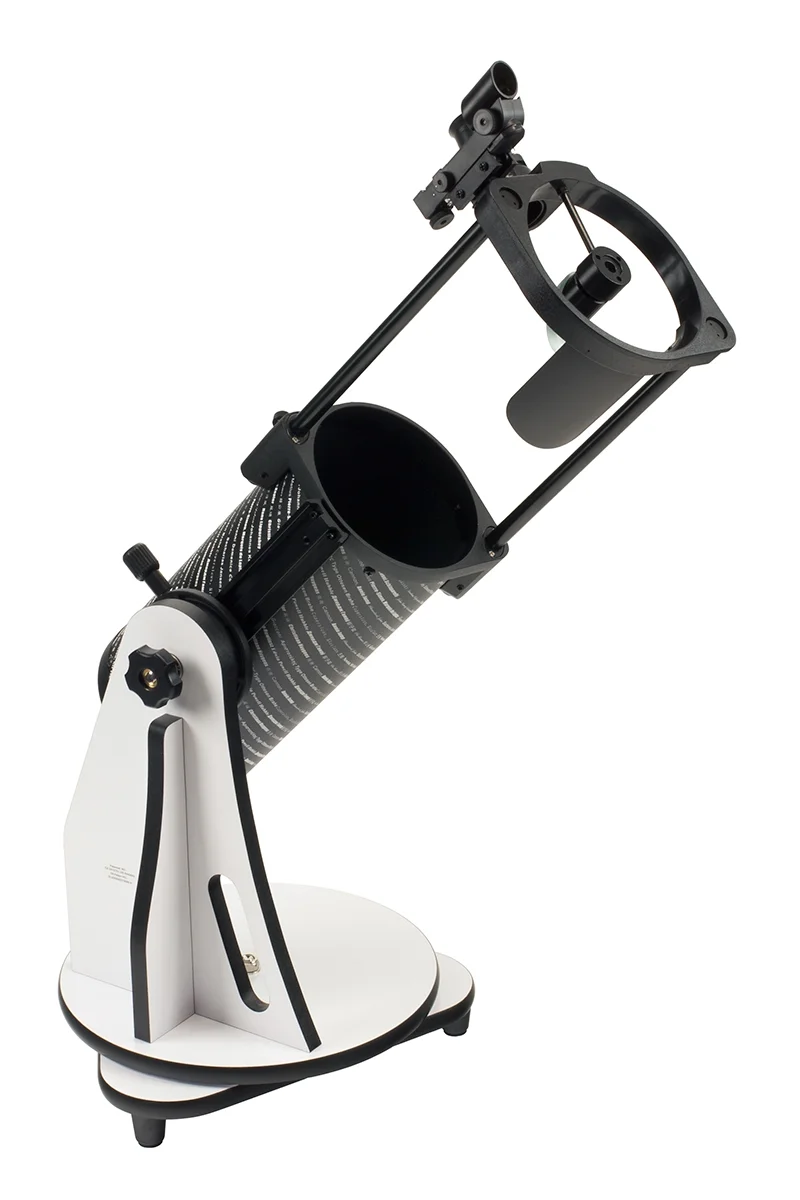
A 130mm mirror shows the rings cleanly at 50 to 75x, the Cassini Division on a steady night, and Titan off to one side. It's compact, sits on a tabletop, and it's the scope we recommend most for Saturn on a budget.
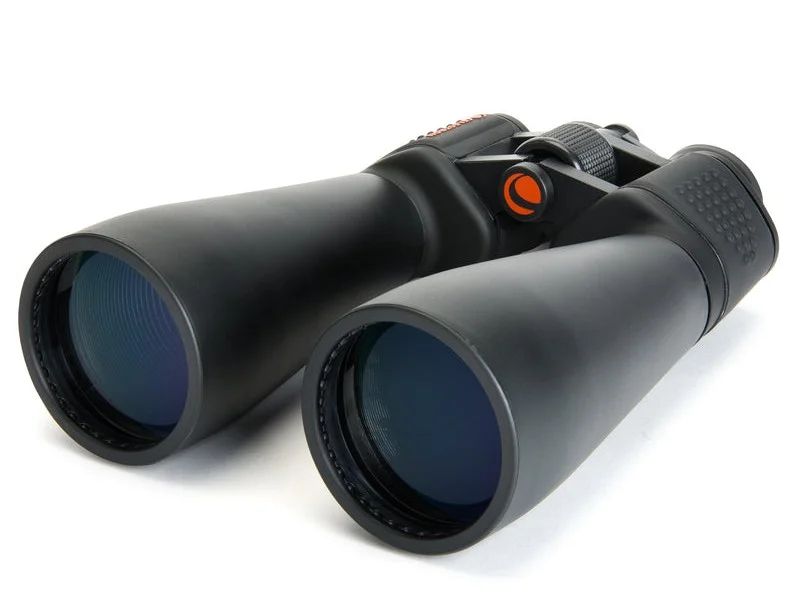
Binoculars won't show the rings, but 15×70s reveal Saturn as an obvious oval rather than a star, and they're ideal for the Moon and star fields while the scope cools down. Use a tripod at this power.
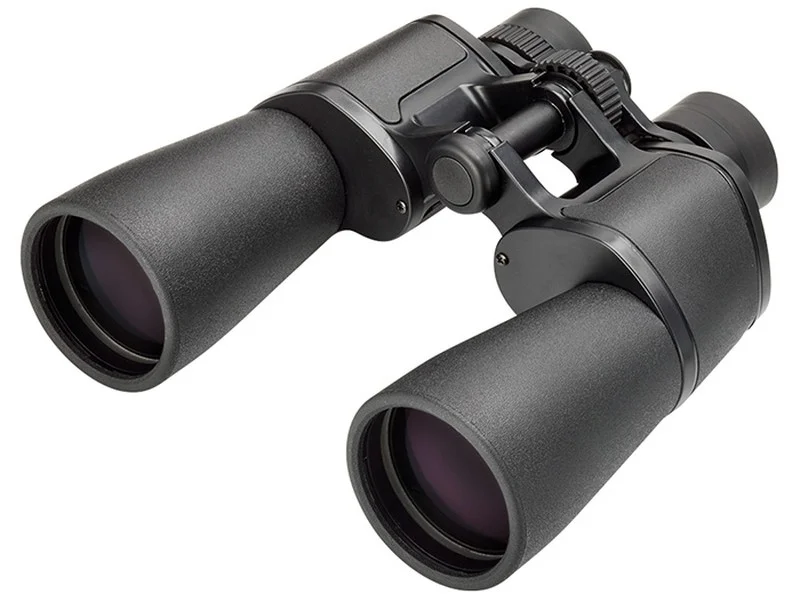
The easy hand-held option for finding Saturn and learning your way around the sky before you swing the telescope over. A bright, wide view that works all year.
Affiliate links: you pay the same price — we earn a small commission that helps keep WatchTheStars free.
Tips for Observing Saturn
Don't wait for opposition night. Opposition on 4 October gives the very best view, but Saturn looks good for months on either side. The prime season runs from September through November, and because Saturn is so distant it barely changes size week to week. Spread your observing across the season and you'll catch different moon positions and different nights of seeing.
Start low, then build up. Find Saturn with your lowest-power eyepiece, centre it, then move up to medium power (100 to 150x) for the main view. If the air is steady, push higher. Low power makes finding and centring easy, and Saturn is bright enough to take high magnification when conditions allow. If you're not sure how eyepiece focal length translates into magnification, our telescope magnification guide works through the maths so you can pick the right eyepiece for the rings.
Chase the Cassini Division. This dark gap between the A and B rings is the feature everyone wants. You'll need at least a 4-inch scope, 100x or more, steady air and Saturn reasonably high in the sky. Use averted vision, wait for the moments when the atmosphere settles, and look toward the outer edges of the rings where the gap opens up most to our line of sight.
Watch the ring shadow. One of Saturn's loveliest details is the dark shadow the rings cast onto the globe, with the planet's own shadow falling across the rings on the opposite side. It's the clearest proof in the eyepiece that the rings really are a separate structure floating around the planet. Medium to high power shows it best.
Track the moons over a few nights. The moons move at different speeds, so the arrangement changes night to night. Titan orbits in about 16 days, and you can trace its path over a couple of weeks; Rhea, Dione and Tethys swing round in four or five days and visibly shift sides. Sketch their positions each clear night and you'll watch the whole system turn. Stellarium and SkySafari will tell you which moon is which.
Observe when Saturn is highest. The less atmosphere you look through, the sharper the view, so aim for when Saturn is near its highest point — around midnight during the opposition season. Low down near the horizon, turbulence will ruin the fine detail no matter how good your scope is.
Wait for good seeing. Saturn's detail depends on steady air. On a good night the stars barely twinkle and the disk looks crisp; on a bad one Saturn seems to boil and the detail comes and goes. If the seeing is poor, drop the magnification and enjoy the overall view, and save the high-power work for the steady nights.
Let the scope cool down. Take your telescope outside 30 to 60 minutes before you observe so it reaches the outside temperature — bigger scopes need an hour or two. A warm scope stirs up its own internal currents that blur the image, which matters a lot at high power.
Sketch what you see. Drawing Saturn forces you to look properly, and you'll notice details you'd otherwise miss. Start with the ring outline, add the Cassini Division and the ring shadow, mark any cloud bands and the moon positions, and note the date, time, magnification and seeing. Comparing sketches over a few weeks is genuinely satisfying.
Try imaging it. Saturn is one of the easier planets to photograph. A smartphone held to the eyepiece does a surprisingly good job. Step up to a planetary camera and you can record a few thousand frames of video and stack the best in AutoStakkert! or RegiStax, which transforms the result. Add an ADC and a tracked mount and you can capture the Cassini Division, cloud bands and moons. The opposition season, when Saturn is largest, is the time to do it.
Your 2026 Saturn calendar at a glance
The best viewing is the opposition window: 4 October opposition in Cetus (magnitude 0.3, up all night), with the brightest fortnight from 24 September to early October and a prime season spanning September to November. Either side of that, June to August offers excellent pre-dawn views as Saturn builds toward opposition, and December stays very good in the evening sky.
The harder months are January to early March, when Saturn is low in the evening and dropping, and April to May, when it's back as a low morning object. Late March is a write-off around solar conjunction.
Saturn delivers year after year, and 2026 is no exception. With the rings opening up again and a well-placed October opposition, it's a great year to show someone the rings for the first time or to go hunting for the Encke Gap yourself. Clear skies.
Resources
Observing tools
- Stellarium Web — shows Saturn's position and the layout of its moons
- Sky & Telescope's interactive sky chart — handy for identifying which moon is which
- ALPO Saturn Section — submit your observations
Background and images
- NASA: Saturn — facts and mission science
- British Astronomical Association Saturn Section — UK observing reports and guidance
Frequently Asked Questions